
Nowa norma ISO 23369 dotycząca filtracji płynów hydraulicznych została już zatwierdzona i wdrożona – oferuje ona lepszy model testowania filtrów, odzwierciedlający rzeczywistą wydajność.
Anyone who uses hydraulic equipment in the field knows that real-world conditions and test-bench conditions are worlds apart. Prawdziwy świat jest brudny. The real world has stress. Zmienne. Warunki rzeczywiste są trudniejsze – jeśli nie niemożliwe – do kontrolowania, natomiast sytuacje testowe są stworzone po to, by być kontrolowane.
Hydraulic systems are tested in real-world conditions before being put on the market. The same should be said for the fluid filtration that protects hydraulic (and lubrication) systems. This is why the filtration testing standard should reflect those conditions as closely as possible. Dzięki zatwierdzeniu normy ISO 23369, testy filtracji wieloprzebiegowej płynów hydraulicznych i środków smarnych obejmują teraz normę, w której zastosowano warunki przepływu cyklicznego bardziej zbliżone do tych, jakie występują w rzeczywistych zastosowaniach sprzętu hydraulicznego.
Efficient Filtration is Vital to Any System
Efficient operation of hydraulic systems requires diligent maintenance, including thorough and efficient filtration. However, the current standard for hydraulic and lube tests, ISO 16889, does not factor in real-world filter performance.
Operating in the field, a hydraulic fluid filter is not typically subjected to the steady-state flow used in the current ISO 16889 testing, but to varying degrees of cyclic flow. When subjected to more stringent testing and varying cyclic flow conditions like those that the proposed ISO/NWIP 23369 would require, it’s been proven that the efficiency and capacity capabilities of an element are challenged to a higher degree.
Celem stworzenia nowego standardu nie jest osłabienie poprzedniego; jest to kwestia czasu i zmieniających się technologii. The industry is simply more capable of applicable testing for filtration products than it was ten years ago. ISO/NWIP 23369 has been in motion since at least 2011, and technology finally caught up so that the industry can implement it.
Norma ISO 16889, poprzednia norma branżowa dotycząca filtrów hydraulicznych i smarowych, rzeczywiście spełnia swoje zadanie: aby szczegółowo opisać projekt i konstrukcję stanowisk testowych, zastosowania zanieczyszczeń oraz procedury stosowane podczas testowania produktów filtracyjnych. It’s a simple test that can be easily repeatable for accurate results, using a steady flow rate and “medium” test dust continuously injected into the filter’s reservoir. But of all possible tests for hydraulic filter effectiveness, it’s the furthest from real-world application and offers no accurate look at how flow-rate fluctuation can alter filter performance.
Test wieloprzejściowy ISO16889
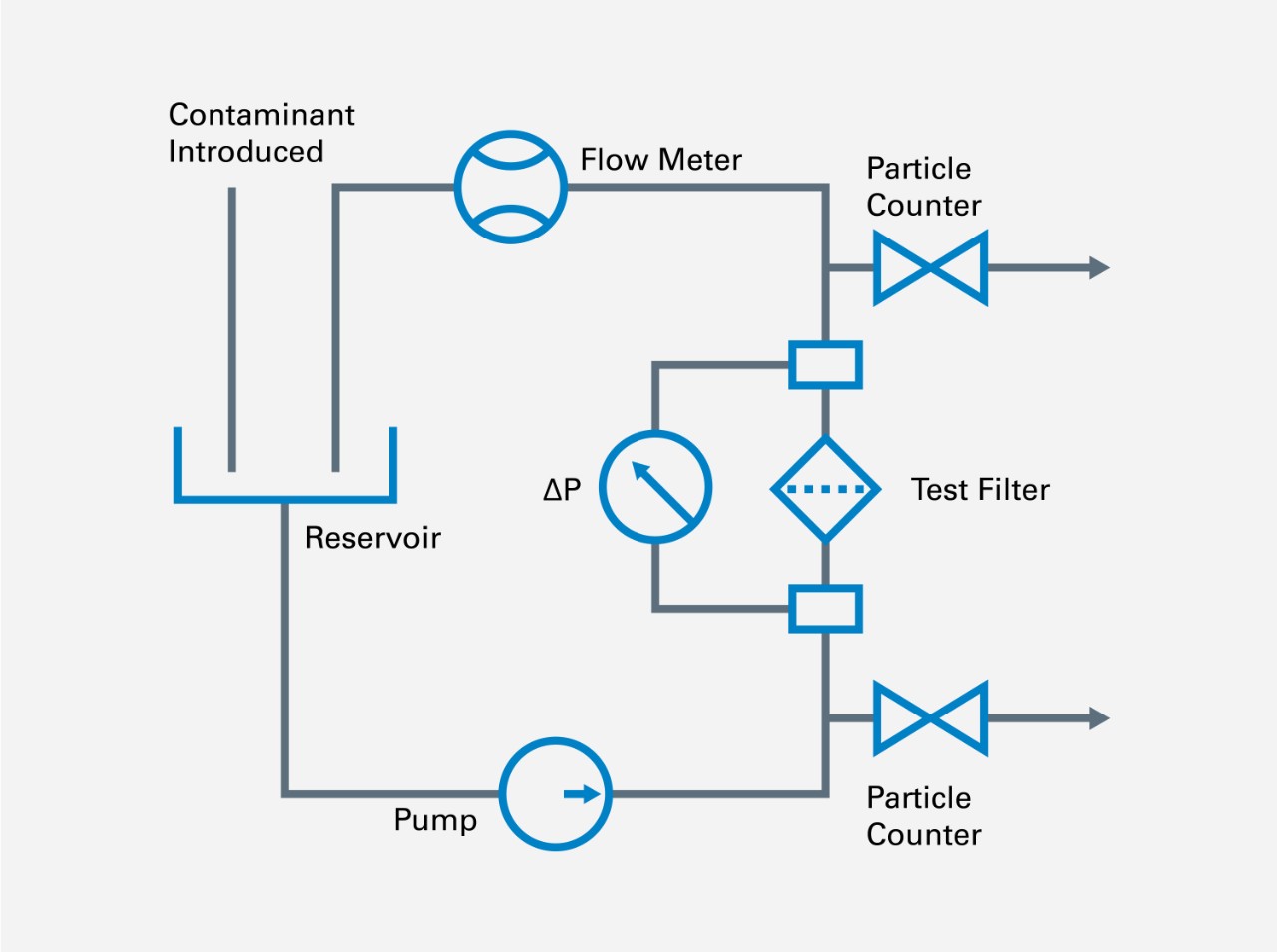
“The main issue with the current standard is that we’re designing equipment for filters that can hold a certain amount of contaminant,” Kreslins says. “But in reality, those filters can hold much less contaminant than they showed in the lab tests, because the varying flow rates in actual field usage means that contaminant caught by the filter can be released due to any number of factors. Actual media pleats, backing material, or any other structure or support in the filter can underperform under stress.”
„Nowa norma zwiększa dokładność specyfikacji filtrów, co w efekcie przekłada się na większą wydajność pracy urządzeń”.
ISO/NWIP 23369 in Practice
The ISO committee includes members of most of the major oil and lube filtration manufacturers, including Donaldson, which is a major reason the need for additional testing is recognized. No manufacturer wants to be accused of making filters that seem less efficient than advertised, which is what happens to current approved filters under stress.
ISO developed this cyclic flow multi-pass test procedure for hydraulic filters in order to supplement the basic steady-state flow test of ISO 16889 for filter elements that are expected to be used in cyclic flow environments. W wytycznych 16889, opartych na badaniu branży i procedurze badań laboratoryjnych metodą „każdy z każdym”, zalecono bardziej rygorystyczny cykl przepływu (0,1 Hz), choć wskazano również, że jeśli w rzeczywistej eksploatacji spodziewane są znacznie wyższe częstotliwości cykli, „test należy przeprowadzić przy takiej częstotliwości, aby uzyskać bardziej miarodajne wyniki”. Jednakże rozpoznawane będą jedynie wartości uzyskane w wyniku testowania przy 0,1.
Multi-Pass tests that utilize cyclic flow rate require operators to choose a cyclic ratio of current change, normally between two-to-one or four-to-one. These ratios will stay consistent throughout testing and offer a one-step-closer approach to “real-world” filter performance results by showing the slough or shedding of particles from filters being tested during current changes in the test fluid. The new standard suggests that flow rates (measured in liters per minute) change every five seconds at a four-to-one ratio.
Just as importantly, the test requires fine dust (smaller than 1 micron) versus the medium dust (5 micron or larger) required by ISO 16889. The five-second changes and varying rates means it’s possible that twice as much data can be recorded, although the data is averaged instead of exact.
So What Does a New Standard Mean for You?
“Everyone who uses filtration depends on that filtration to protect their costly equipment,” Kreslins says. “And they need to be able to unquestionably trust that filtration to minimize downtime and unexpected costs. Our international standards are in place to guarantee a certain level of quality and performance. Because of that, our standards need to be constantly evaluated to stay in line with current technology and equipment usage.”.
For end-users and equipment manufacturers, the primary benefit of this new standard – other than the obvious benefit of more efficient and reliable filtration – is the minimization of surprises. Whether for equipment design or actual application, the purchase of a filter comes with a certain trust that comes from the certification on the label. A filter has to be reliable when it comes to the capture and retention of contaminants. If it can’t capture contaminants of a specific size at a specific efficiency, it cannot be relied upon. But retention capacity is as, if not more, important. If the filter is cleaning fluid effectively but has nowhere to put the contaminants, it can ironically end up becoming a damaging source of contamination in a hydraulic system.
Which brings us back to cyclic flow. In current lab testing, the flow rate is constant, not taking into account that equipment at work can send fluid through a filter at varying rates. If not equipped to handle these varying rates, the filter becomes less efficient, and its capacity can be reduced. Jeśli użytkownik oczekuje, że filtr wychwyci 100 gramów zanieczyszczeń (na przykład), filtr musi spełnić swoją funkcję.
“The long story short is that there are filters currently on the market that meet the current standard in every possible way,” Kreslins says. “The standard just isn’t good enough, so unexpected failures are happening. Często nie jest to wina filtra; po prostu stosuje się wobec niego pewne standardy, przez co wydaje się on bardziej wydajny, niż jest w rzeczywistości.
If passed, ISO/NWIP 23369 will go a long way toward assuring users that they’ll receive a level of performance they expect from their hydraulic and oil filters, all other things being equal.
*Artykuł pierwotnie opublikowano w czasopiśmie Hydraulics & Pneumatics.