
Compressed air is an important resource in many industrial settings. Manufacturers use it in a variety of applications, including automotive paint systems, laser cutting, robotic assemblies, and electronics manufacturing.
The air that enters a compressor already carries a mix of contaminants like dust, oil, and moisture from the surrounding environment. In addition, the compression process itself -especially in lubricated compressors - can introduce oil aerosols and fine particles. Together, these contaminants can harm equipment performance, affect product quality, and drive up maintenance costs.
To help maintain dependable operation and air quality, use a multi-stage filtration approach. Each stage targets specific contaminants introduced at various points in the compressed air cycle.
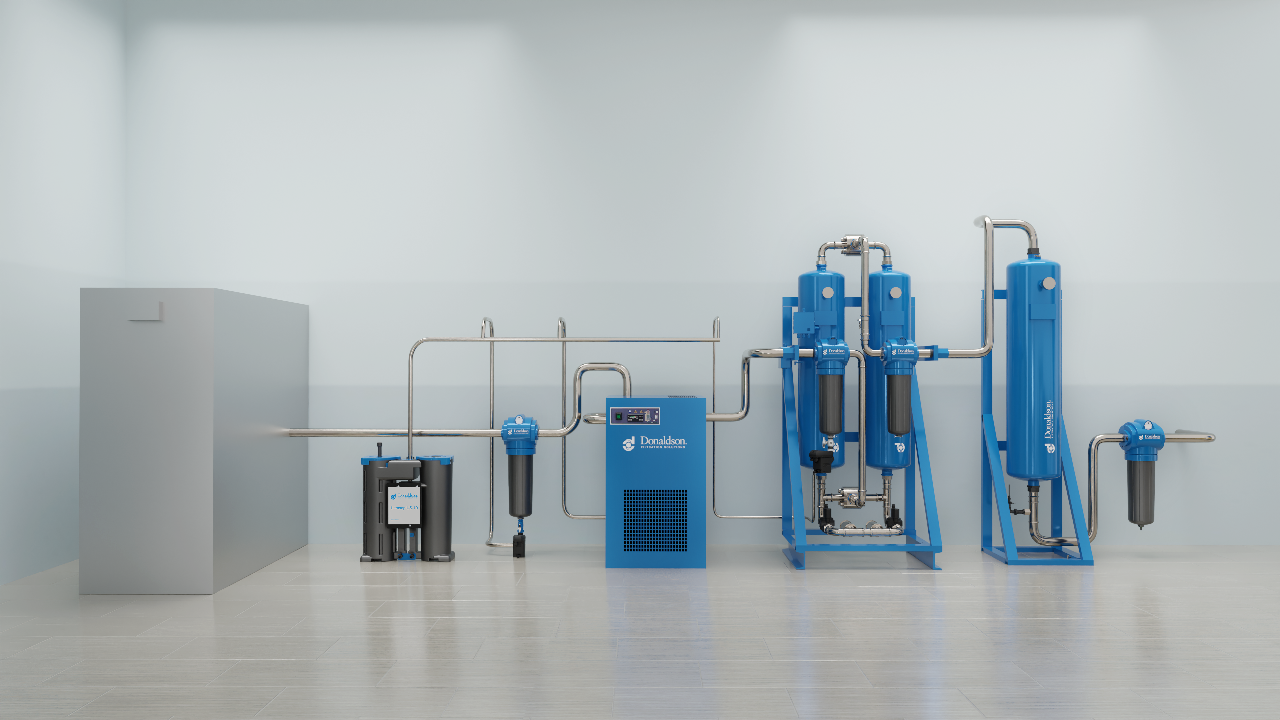
Core Filtration Components
A well-designed filtration system removes contaminants progressively as air moves through the system. The following components typically form the foundation of industrial compressed air treatment setups:
Particulate Filter – Removes Solid Particles
Particulate filters catch dry contaminants like dust, rust, and scale. The intake air brings them in, or the compressor and pipes produce them. These filters use different media designed to trap solid particles before they reach sensitive components.
Why It Matters
Solid debris can damage pneumatic actuators, valves, and tools through abrasion or blockage. In environments like electronics assembly and laser cutting, particulate contamination can interfere with production precision. Donaldson provides various particulate filters with different micron ratings. These filters can be used to help comply with the ISO 8573-1 purity classes.
Coalescing Filter – Removes Liquid Water and Oil Aerosols
Coalescing filters remove fine liquid aerosols - including oil and water - remaining in the air after initial bulk separation. Within the filter, small droplets merge through coalescence, forming larger droplets that drain away from the airflow.
Why It Matters
Oil and moisture aerosols can reduce pneumatic system efficiency, foul instrumentation, and contaminate end products. Coalescing filtration supports reliable operation in applications such as robotics, automated paint lines, and precision tool control.
Dryer – Removes Moisture
Dryers are used to remove moisture from compressed air before it condenses in downstream lines or equipment. Donaldson provides two main types:
- Refrigerated air dryers, which cool air to a dew point of approximately +3°C, condensing and draining out moisture.
- Desiccant dryers use adsorption to reach dew points as low as -70°C. They are designed for applications that need extremely dry air.
Why It Matters
Moisture can lead to corrosion, erratic pneumatic behavior, and in colder environments, frozen lines. Removing it supports the long-term stability and responsiveness of air-powered systems across a range of industrial uses.
Activated Carbon Filter – Removes Oil Vapors and Odors (Optional)
Activated carbon filters are an optional stage for applications requiring removal of oil vapors and odors. These filters use adsorption to capture hydrocarbons and other trace gases within a specially treated carbon bed.
Why It Matters
In processes like painting, finishing electronics, or molding plastic, even tiny amounts of vapor can cause problems. They can harm the quality of the surface or affect precision. Activated carbon filters help clean the air, however, they should be checked for saturation and replaced when needed.
Supporting Components for System Performance
Several supporting technologies work alongside filtration stages to support air quality and system reliability:
- Aftercoolers: Used immediately after compression, they cool air to condense moisture before it enters the filtration system.
- Centrifugal Separators: These devices spin to remove heavy liquid water and particles. This helps lighten the load on filters that follow.
- Condensate Management: Automated drains and oil-water separators are necessary to remove and treat collected liquids, supporting operators’ compliance programs and helping reduce manual maintenance.
Conclusion
In industrial operations such as robotics, laser cutting, painting, and electronics manufacturing, clean compressed air supports process stability and equipment longevity. Contaminants such as dust, oil, and moisture enter at different stages. They come in from the air, the compression process, and system wear. These contaminants need specific filtration.
A multi-stage setup — including particulate filters, coalescing filters, dryers, and activated carbon filters — helps address these challenges systematically. Combined with aftercoolers, centrifugal separators, and condensate management solutions, these technologies contribute to smooth operations, low maintenance demands, and consistent results.
Choosing the right combination for your system is not just about complying with air quality standards. It is also about supporting performance, reliability, and productivity in your industrial processes.