
The shift to ultra-low sulfur diesel (ULSD) was an important step toward cleaner emissions.
But it also created a new challenge: the loss of natural lubrication that sulfur compounds once provided.
To solve this, fuel suppliers now rely heavily on fuel additives to restore lubricity, prevent corrosion, and improve injector performance.
While additives are essential, improper blending or incompatible mixtures can cause serious problems, including filter plugging and injector damage.
Here’s what you need to know to protect your fleet.
The Hidden Risk of Incompatible Fuel Additives
Many additives used today are surfactant-based, meaning they:
- Bind to metal surfaces for lubricity and corrosion protection
- Attach to water droplets (as emulsifiers)
- Prevent wax crystals from settling in cold conditions
- Help remove injector deposits
However, without industry-wide standards for additive compatibility, problems often arise.
One major risk?
Acid and base additives can react inside the fuel, creating harmful particles.
Specifically:
- Carboxylic acid-based additives can react with metallic elements to form metal carboxylates.
- These are tiny, insoluble particles — often smaller than 4 microns.
- They can clog fuel filters prematurely or, worse, damage high-pressure common rail (HPCR) injectors.
When contaminants sneak past filters, they accelerate injector wear, reducing engine life and increasing maintenance costs.
How to Reduce Additive-Related Problems
- Ensure fuel is clean and dry at all stages of handling.
- Track what additives are used and where they are blended.
- Avoid additive overdosing — more is not always better.
Too many additives can create soft contaminant build-up, choking filters and cutting service intervals short.
Watch Out for Glycerin in Biodiesel Blends
Biodiesel is another source of potential contamination.
Even though there are limits on total glycerin content, several factors can influence its stability:
- Blend ratio of biodiesel to diesel
- Fuel temperature changes
- Water content in the storage tanks
If glycerin precipitates (falls out of solution), it behaves like a contaminant:
- Reduces filter life dramatically
- Compromises fuel flow and engine performance
Best Practices for Managing Biodiesel
- Choose biodiesel blends with low free glycerin levels.
- Store fuel properly — keep it dry and avoid extreme temperature swings.
- Regularly inspect and maintain storage tanks to prevent contamination buildup.
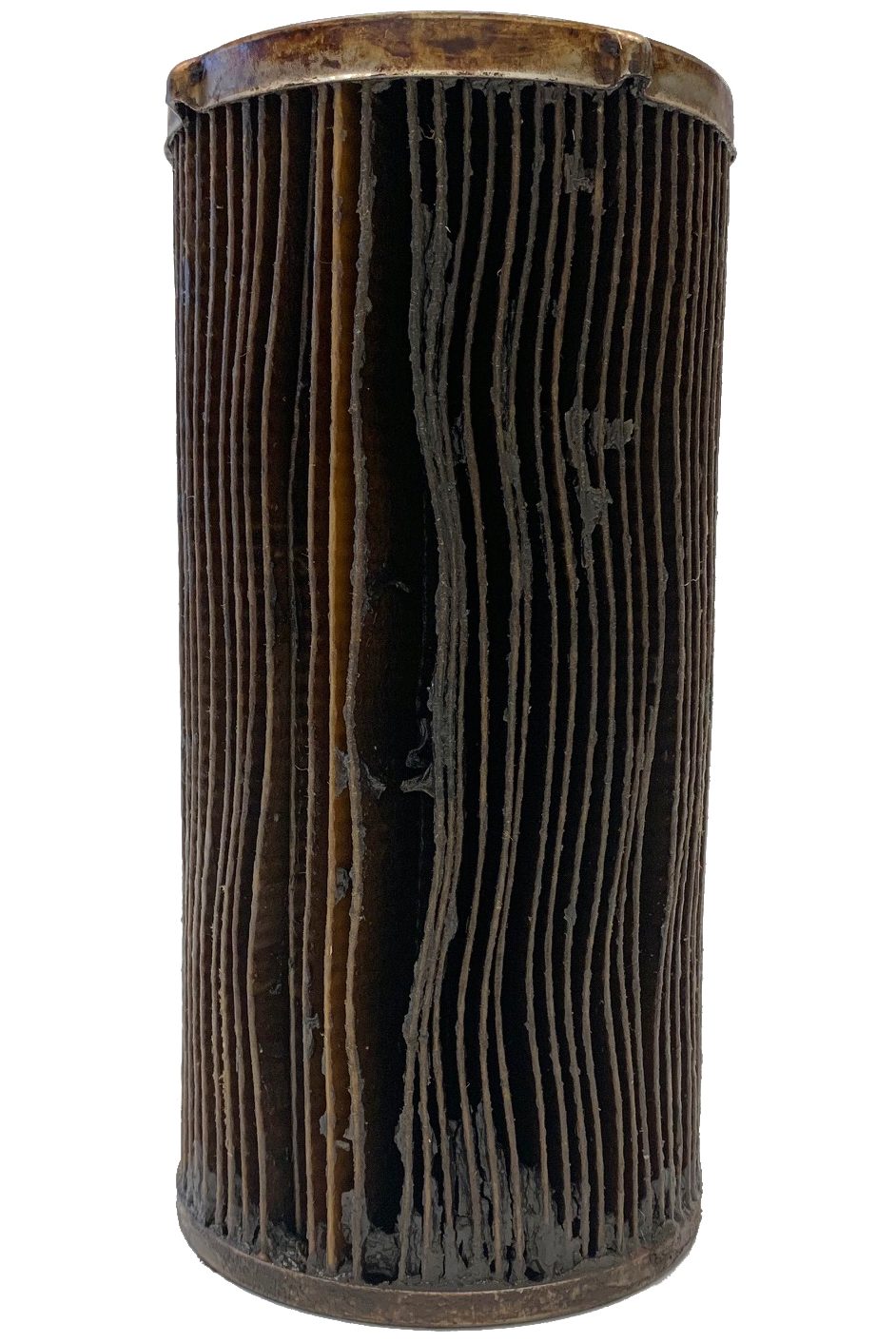 A glycerin-damaged fuel filter
Why Efficient Filtration Matters
When faced with filter plugging, it may seem tempting to switch to a lower-efficiency filter to extend service intervals. But that’s a dangerous shortcut.
Modern fuel systems — especially HPCR — are incredibly sensitive.
Using a less efficient filter risks:
- Premature wear
- Costly injector failures
- Engine downtime
Instead, the smarter move is to:
- Investigate the root cause of plugging
- Partner with a trusted filtration expert to find a long-term solution
At Donaldson, we offer proven media technologies like Synteq XP™, found in Donaldson Blue® fuel filters, designed to deliver:
- Superior efficiency
- Maximum contaminant retention
- Reliable protection under real-world conditions
The Bottom Line
Understanding fuel chemistry and filtration is key to avoiding unexpected downtime and repair bills.
By working with a trusted supplier and using advanced filtration technology, you can:
- Protect your injectors
- Extend filter life
- Keep your fleet running smoothly — no matter what fuel challenges come your way