
Today’s diesel engines demand cleaner fuel than ever before — but maintaining that level of cleanliness is increasingly complex.
Fortunately, advancements in fuel filtration technology are meeting the growing demands of modern engines. Here are five important facts you should know about fuel quality and filtration:
1. Even the Smallest Contaminants Can Cause Big Problems
New low-emission diesel engines use high-pressure common rail (HPCR) fuel systems, which are extremely sensitive to the tiniest of particles, typically in the size range between bacteria and red blood cells. To protect these systems:
- Incredibly precise fuel filters capture and retain up to 99.95% of 4-micron particles.
- A fraction of a percentage in filter efficiency can be the difference between fuel meeting the cleanliness demands of an HPCR system or not.
2. Water Remains a Major Threat
Water in diesel fuel can cause a range of issues, including filter plugging, injector deposits, fuel instability, and bacterial growth in onboard and bulk tanks. Modern solutions focus on coalescing filtration, which:
- Uses multi-layered media and multiple separation stages.
- Combines smaller water droplets into larger ones for removal from the fuel.
This advanced filtration helps protect equipment performance and reliability.
3. Fuel Additives Require Care
Ultra-low-sulfur diesel (ULSD) fuels are dosed with additives at the refinery level to replace the lubricating properties lost when the sulfur-based compounds were removed. Fuel suppliers in some regions offer additised premium diesels designed to minimise injector fouling. Biocides to treat fuel bug, off-the-shelf injector cleaners, emulsifiers, demulsifiers, oxidisation stability enhancers, and a range of winter-specific products may be available in your region.
- Additional additives must be carefully selected and properly applied to avoid unintended side effects.
- Consult your engine OEM, fuel, and filtration suppliers before initiating a site-based additive program.
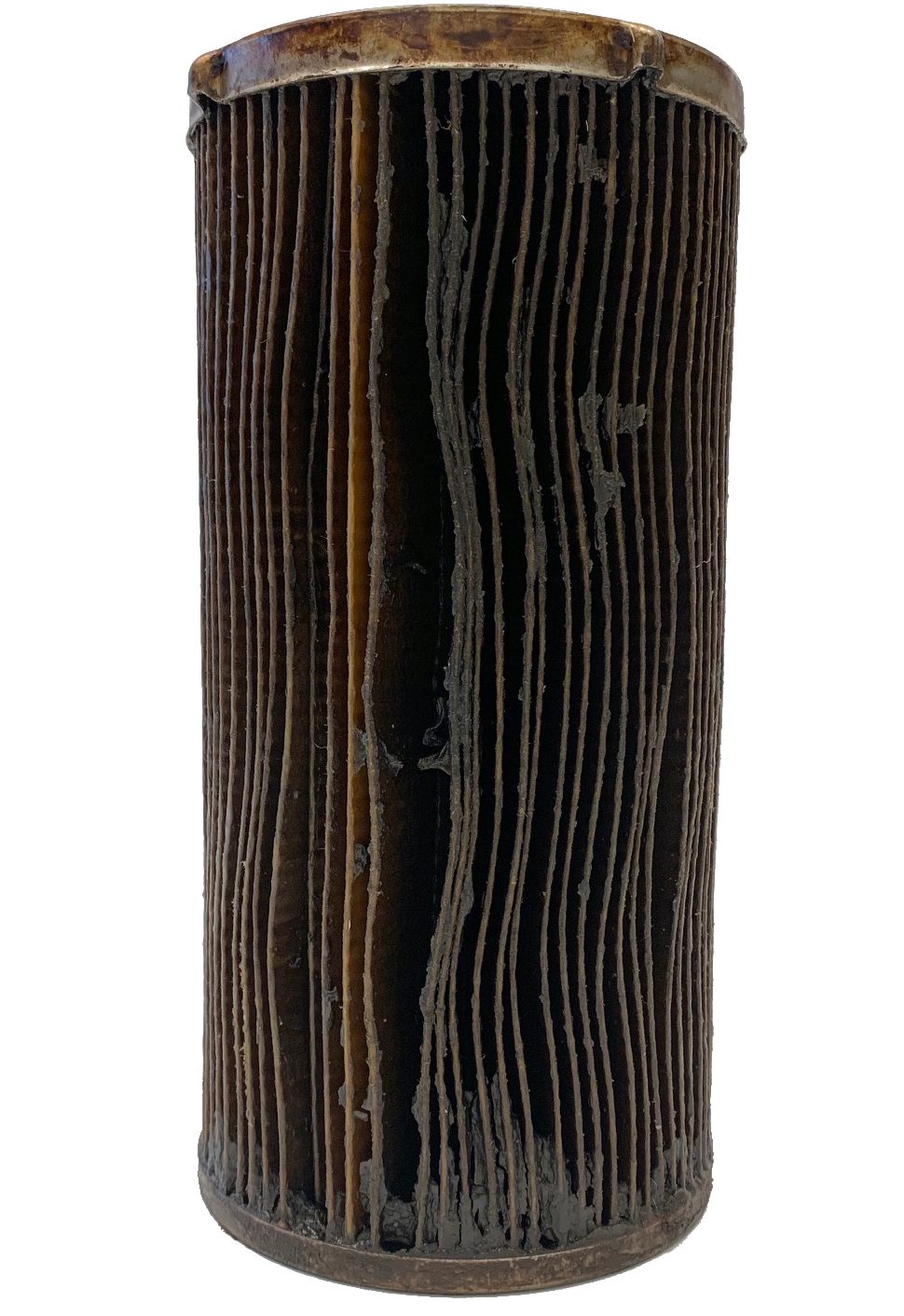 A glycerin-damaged fuel filter
4. Monitor Your Biodiesel Blends
Biodiesel blends often contain glycerin and other byproducts. While these compounds don’t cause problems when the fuel is warm and dry, they can become a concern when conditions change.
Precipitated glycerin (dropped out of solution) rapidly plugs efficient fuel filters, resulting in short element service life. Consider the installation of an Active reservoir vet (ARV) to maintain stored fuels in a drier condition.
5. Fuel Filters Are More Advanced Than Ever
Today’s filters capture finer particles that old generation filters could not, meaning a modern filter being used on the same fuel as its predecessor may load more quickly. To address this:
- Advanced media technologies like Synteq XP™ incorporated into Donaldson Blue® fuel filters deliver exceptional efficiency, contaminant retention, and capacity.
Fuel filtration is your first and last line of defense against downtime, equipment damage, and higher operational costs. Protecting your diesel engines with the right filtration technology helps you avoid warranted failures and lowers your total cost of ownership.
 Modern filtration media technologies such as Donaldson’s Synteq XP Media feature thermally bonded fibers for a high level of efficiency and contaminant retention