
When it comes to engine protection, choosing the right lube oil filter is essential, but the options can be confusing. Full-flow, by-pass, and combination filters each serve different purposes, and knowing how they work can help you make better maintenance decisions.
Let’s break down the key differences and benefits of each filtration style.
What Is Full-Flow Filtration?
Full-flow filters are the most common type used in engines today. They filter 100% of the oil before it circulates back through the engine, offering vital protection against wear-causing contaminants.
Key considerations for full flow filters:
- Low initial pressure drops to hasten bypass valve closure
- Maximum flow of oils with low pressure loss across the filter
- Quality media, such as Donaldson Synteq™, to capture and retain small particles
- High contaminant capacity to maximise service life
- Full-flow filters may include a bypass valve to ensure oil flow when the media is heavily loaded or under cold-start conditions
What Is By-Pass Filtration?
By-pass filters work differently. They do not clean the total oil flow; rather, they accept approximately 10% of the oil flow and return the cleaned oil back to the sump. This separate oil flow path may be referred to as a “kidney loop.”
Key benefits of bypass filters include:
- Enhanced oil cleanliness: They often incorporate highly efficient or depth medias providing greater cleanliness or polishing of the oil.
- Increased oil capacity: They add volume to the system, increasing total oil life.
- Being on their own circuit, there is no interruption to the engine’s primary oil flow.
What About Combination (Two-Stage) Filters?
Some manufacturers offer combination, or two-stage, filters that attempt to blend full-flow and by-pass filtration into a single element. While the idea sounds efficient, this design often comes with trade-offs:
- Higher restriction: The dual-media pack design can increase pressure loss through the filter, especially during cold starts.
- Reduced protection at startup: Cold heavy oil may cause the bypass valve to remain open longer, allowing greater amounts of unfiltered oil through to the engine.
- Delayed efficiency: The more efficient bypass media inherently have higher restriction, initially driving most of the oil flow through the lower-efficiency full-flow media.
In short, while combination lube filters aim to do both jobs, they may compromise filtration performance and expose engines to extended periods of risk during cold starts.
Note: These combo filters are sometimes incorrectly labelled as “bypass filters.” True by-pass systems are kidney loops designed to polish oils. Please do not confuse combination filters with full-flow filters containing integrated bypass valves.
The Role of By-Pass Valves
While we know that engines need clean oil, depriving an engine of oil ends catastrophically. By-pass valves could be considered as safety features, ensuring that oil keeps flowing, even when conditions aren’t ideal, like during cold starts or when the filter is at capacity.
Important facts about bypass valves:
- They may be in the filter head or built into the filter itself.
- Ideally, bypass valves are closed during normal operation, ensuring all the oil is filtered.
- Valves should only ease open when necessary, protecting the engine from oil starvation.
Why Full-Flow Filters Still Lead the Way
Every oil filter design must balance three critical factors:
- Efficiency: How well it removes and retains contaminants.
- Capacity: How much dirt it can hold before going into bypass.
- Restriction: How freely does oil flow through the element.
Donaldson’s full-flow filters with Synteq media strike the right balance. They deliver:
- High filtration efficiency
- Low cold-start pressure loss
- Long service life
In comparison, two-stage filters often increase cold start restriction and may shorten service intervals.
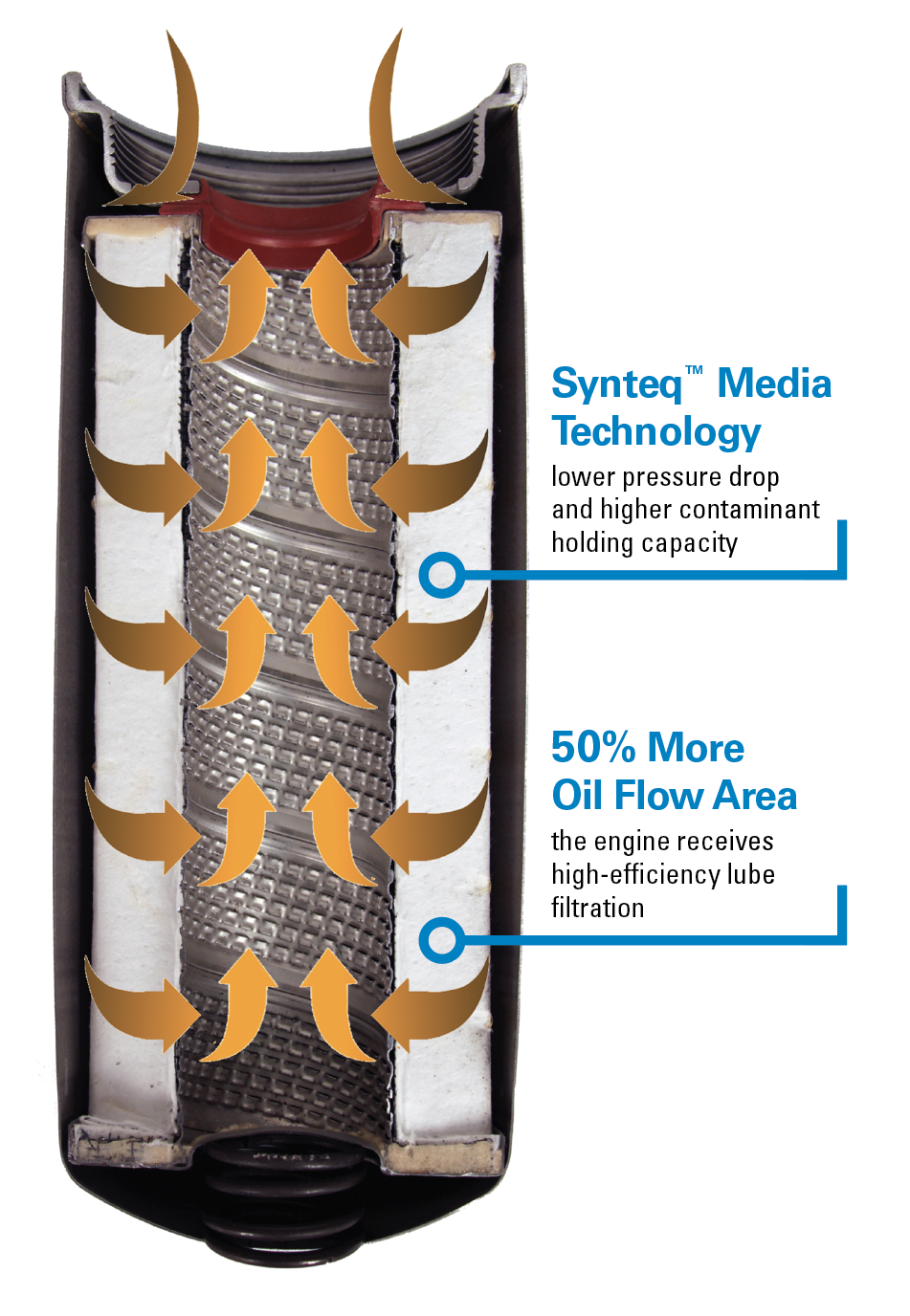 Full-Flow Design: Donaldson full-flow filters incorporating Synteq media technology are extremely efficient high capacity elements that minimize cold start pressure loss. These filters provide the cleaning power of high-efficiency by-pass filters without sacrificing filter life or increasing restriction.
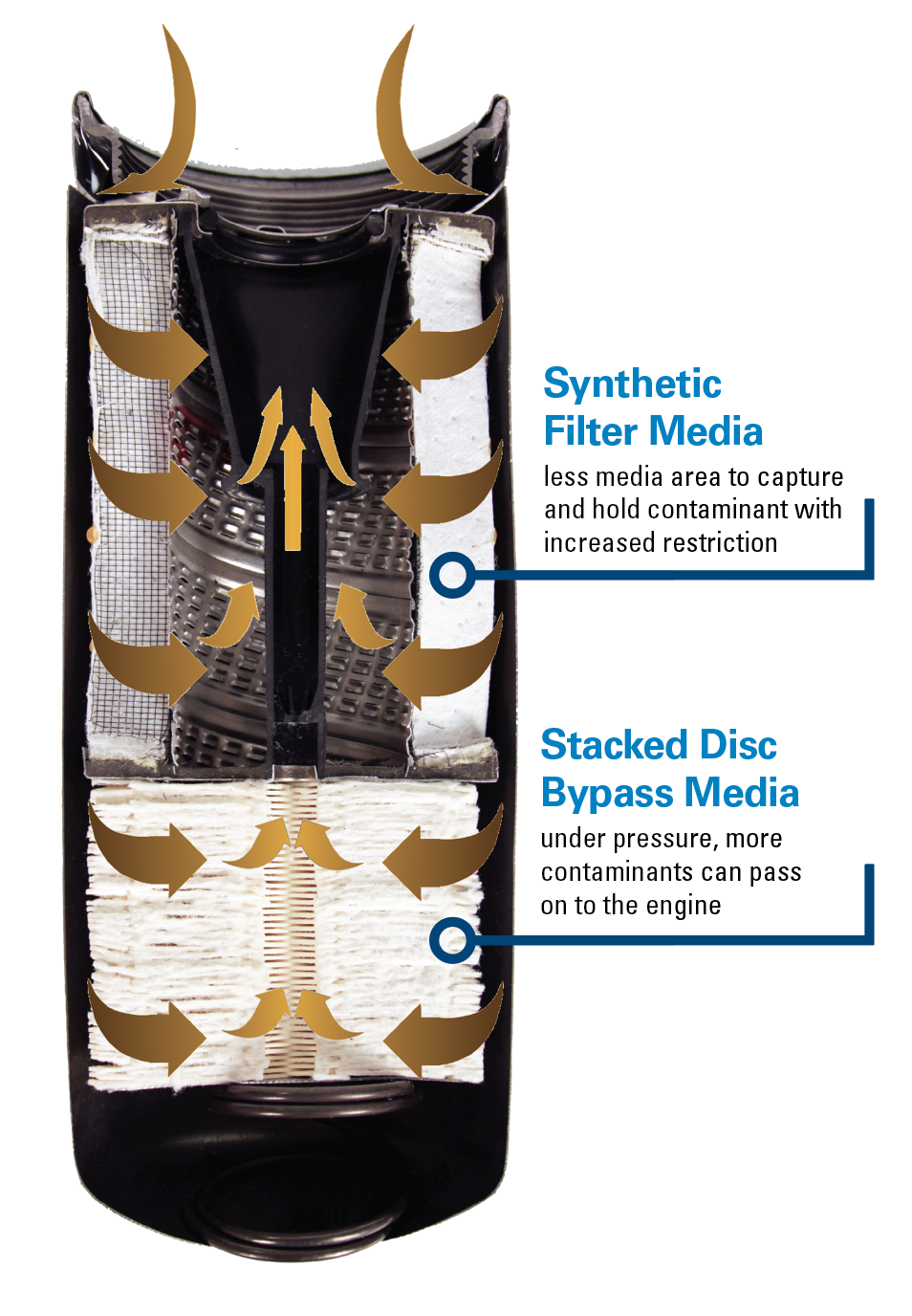 Two-Stage Combo Design: Two-stage or combo filter designs split the oil flow between two media packs and suffer greater cold start pressure loss.
The Bottom Line
While combination filters might sound convenient, full-flow lube filtration provides superior engine protection with fewer compromises. When manufactured with advanced synthetic media, like Donaldson Synteq™, full-flow filters deliver performance and reliability you can count on.