
High-pressure common rail (HPCR) fuel injection systems are essential to the power, efficiency, and reduced emissions we expect from modern diesels. These engineering innovations come with new challenges, especially when it comes to protecting sensitive components from hard particle contamination.
Microscopic contaminants cause major problems, placing great importance on fuel filtration.
Why HPCR Systems Are More Vulnerable
Modern fuel systems operate under extreme pressures typically exceeding 2000bar (29,000psi) and, unlike their predecessor,s deliver multiple injection events every engine cycle. Particles as small as 2 to 3 microns, or the size range of bacteria, can cause irreparable damage:
- Erosive injector wear affects spray patterns, impacting combustion efficiency, performance, and fuel economy.
- Fuel pumps' scoring and abrasion will compromise pump performance.
The first signs of damage to an HPCR may include:
- Hard to start faults- excessive cranking times
- Rough idling, especially on start-up
- Reduced power or poor acceleration
- Increased fuel consumption
Over time, you can expect that greater amounts of emissions will be produced, ending in costly HPCR repairs or even complete engine failure.
Earlier fuel injection components, such as Electronic Unit Injectors, operated at lower pressures and were at greatest risk from larger particles in the 6 to 7 micron size range. Diesel fuels that were previously accepted as being “clean enough” have proven to be a liability to our modern advanced fuel injection systems.
Fuel Filtration Efficiency Must Keep Up
There was a time when a fuel filter with an efficiency of 95-98% at 4 microns was considered a high-performing element. Today, HPCR fuel injection systems require:
- Filtration efficiency approaching 99.95% on 4-micron particles.
- Consistent high-performance under dynamic, high-pressure conditions
The smallest drop in efficiency can fail to achieve OEM ISO4406 cleanliness expectations.
Modern Fuel Filters: Built for the Job
To meet these demands, today’s fuel filters use advanced synthetic media — often made from multi-layer synthetic or micro-glass formulations. These filters:
- Capture smaller hard and soft contaminants
- Provide higher contaminant-holding capacity within the same physical size
- Deliver service intervals without sacrificing fuel cleanliness performance
Higher capacity is especially important, simply because contaminants that passed through older filters now load on new generation fuel elements.
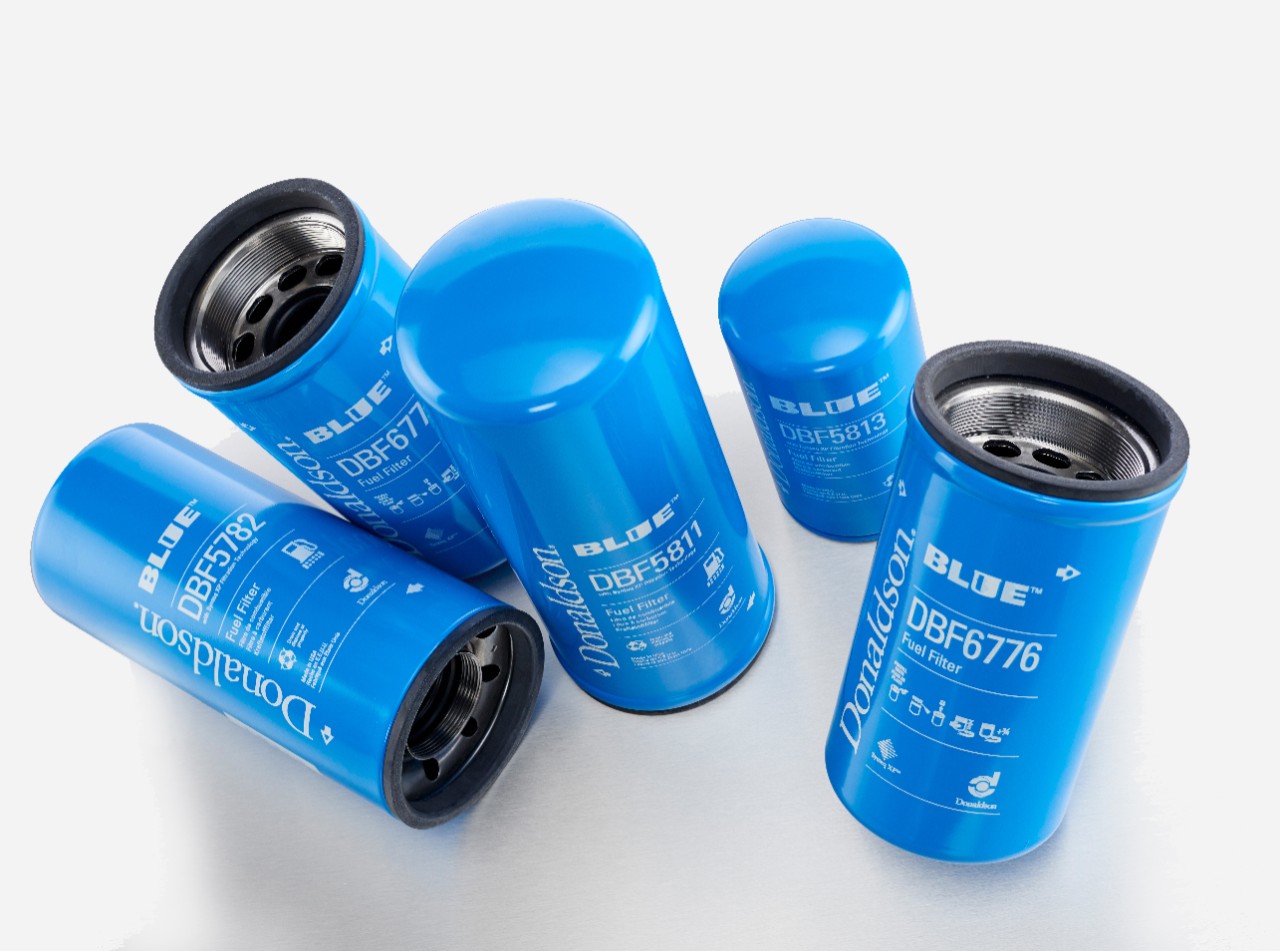
Donaldson Synteq XP™: Engineered for the Real World
Donaldson’s Blue® fuel filters with Synteq XP™ media are engineered for today’s toughest fuel system requirements. This advanced filtration media:
- Combines ultra-fine synthetic fibers with a proprietary resin-free bonding method
- Efficiently captures and retains contaminants under real-world operating conditions
- Helps to maintain HPCR fuel systems in better condition for longer
All filters are not created equally. What’s inside truly matters — especially when engine reliability and total cost of ownership are on the line.
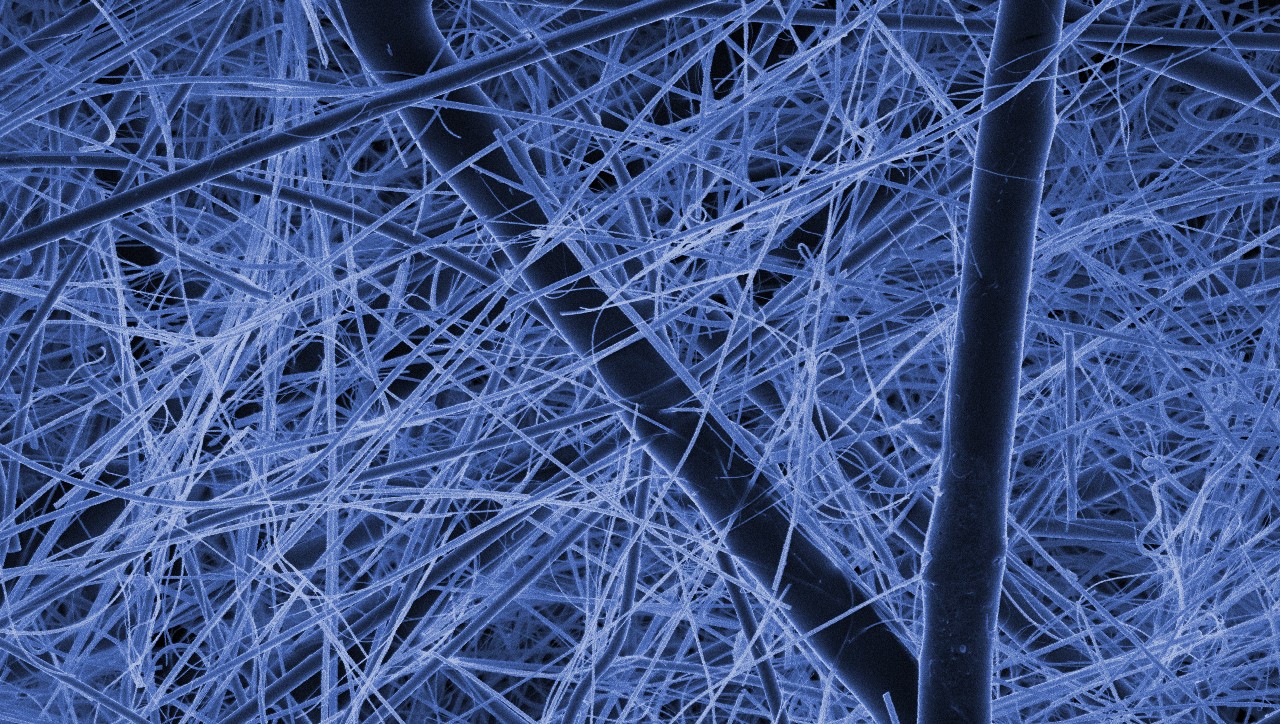 Advancements in fuel filter media technologies are meeting the demands of today’s engines, which operate in a wide range of environments. The Synteq XP™ media used in Donaldson Blue® fuel filters combines fine-fiber technology with a resin-free bonding system for optimum contaminant removal and retention.