
If you looked closely at what’s really in your diesel fuel, you might be surprised—and not always in a good way. From water to debris, contaminants can quietly sneak into your fuel system and cause serious damage.
Contaminated fuel is one of the leading causes of downtime and expensive repairs on engines equipped with high-pressure common rail fuel injection systems. Clean fuel isn’t just a preference—it’s essential.
Let’s take a closer look a common fuel contaminants and how they impact your engine.
The Usual Suspects: What’s in Your Fuel?
Here are the seven most common types of contaminants found in diesel fuel:
- Particulate & debris
The concentration of hard particles will often increase during fuel transfer operations or through exposure to the atmosphere. Aged and poorly maintained infrastructures can add to vast quantities of additional abrasive particulate. - Water
Free water can be delivered with your fuel but more commonly enters the fuel through improper handling, condensation and thermal cycling. Water is the curse of diesel and biodiesel blends. It hastens corrosion, damages injector nozzles, reduces lubricity, disrupts combustion, provides a home for fuel bugs to thrive, contributes to glycerin drop out and can make some compliant fuel additives unstable. - Wax/paraffin
Compounds that can solidify in cold temperatures, causing fuel to gel and slow flows - Microbes (bacteria or fuel bug)
Grow in free water on tank bottoms and feed off the bottom of the fuel; their by-products are corrosive, and fuel bug rapidly blocks filters - Fuel degradation products
Heat and time will lead to fuel oxidation or ageing, degradation products block efficient filters quickly. - Asphaltenes
Naturally present in crude oil, these can be found even in refined fuel. - Air
Can enter through leaks in fuel lines or loose fittings and will create significant engine performance issues.
Did You Know?
Water is one of the most harmful contaminants found in fuel systems. Fortunately, a fuel water separator can help remove both water and solid particles before they reach your fuel pump, protecting your engine and saving on repairs.
How Filters Remove Contaminants
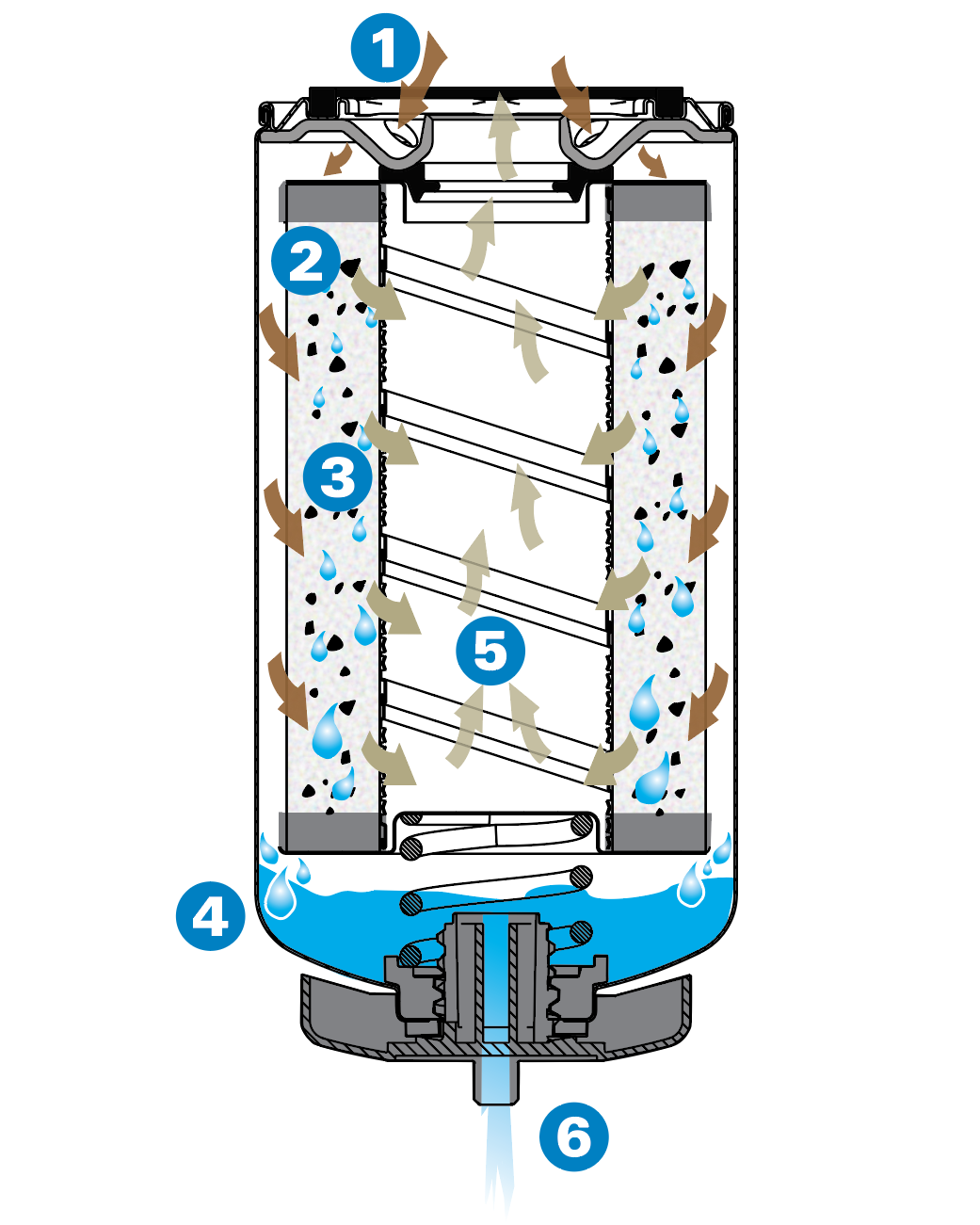
Most water separator filters (FWS) are outside to in flow:
- Dirty fuel enters the filter through the small holes in the baffle/tap plate and moves down between the media and the filter can.
- Hydrophobic media rejects water.
- Tiny droplets of water coalesce into larger drops that sink to the lower reservoir at the base of the filter.
- Particulates load on the filter media.
- Cleaned fuel leaves the filter through the large centre hole in the baffle/tap plate.
- Donaldson Twist and drain FWS filters are fitted with a ¼ turn water drain tap to allow ease of water removal.
- An optional clear bowl can be installed directly to the twist and drain filter if required.
- Twist and drain taps with a range of water-in-fuel (WIF) sensor fittings are available
- Donaldson recommends draining water daily.
Final Thoughts
Modern engines demand ultra-clean fuel. With the right filtration strategy and regular maintenance, you can minimise contamination-related damage, extend component life, and keep your equipment running efficiently.