
Air filters are the first and last line of defence against engine-destroying airborne dusts and contaminants. Safety filters are an extra layer of defence in high-dust applications.
What is a Safety Filter?
Safety filters are possibly the most misunderstood of all the commonly applied engine filters. They are often referred to as and believed to be secondary filters, meaning that the primary air filter removes most of the dust from the incoming air, and that the secondary filter cleans the air even further. Safety filters are not secondary filters, and we shall explore their purpose.
Construction and Design
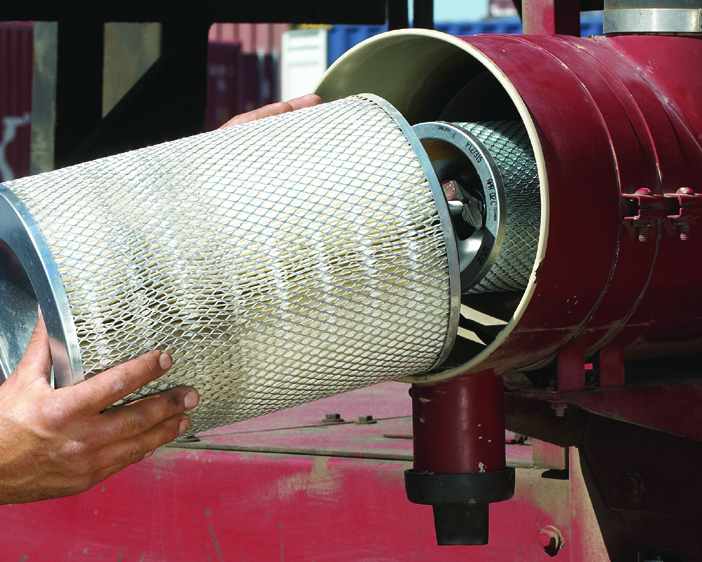
Most Donaldson air filter assemblies engineered for medium and high dust off-road applications are supplied complete with a safety filter. Depending on design and air cleaner model, safety filters come in different styles:
- Pleated construction, similar in appearance to the primary filter
- Slimline designs are ideal for smaller air cleaners
- Pleated panel, often used after a primary PowerCore element
Safety filters have a small media surface area compared to the primary element. To minimise additional restriction, safety media is more open and porous than the primary filter it is matched to. This design reduces airflow restriction while still capturing harmful contaminants. Safeties are not intended to hold a large amount of dust, and because of their small media surface area, will plug quickly if exposed to engine-damaging particles.
The Role of a Safety Filter
Safety filters serve two critical roles:
- Their function is to remain in position while the primary filter is being serviced. It is normal that off-road housings are at least partially loaded with dust at the time of service works. The safety filter protects the clean air outlet from engine-damaging contamination during these works.
- The safety filter also acts as the last line of defence if the primary filter was installed with unseen transport, handling or cleaning damage.
If, during primary element servicing, it is noted that the safety has a dust loading, please change out the safety element and perform a root cause analysis to identify why dust has passed the primary filter.
Did You Know?
Do not attempt to clean a safety filter, and never run an engine with only the safety filter installed. Safety filters are not intended to be changed every time a primary element is changed. Most sites and applications find that the best change-out ratio of safety to primary elements is between 1:2 and 1:4.
Key Takeaways
- The safety filter isn’t designed to improve overall air filtration efficiency
- Safeties are vital backups, preventing potential catastrophic engine damage
- A plugged safety filter is a warning sign that both filters need replacing.
Extra Protection for Peace of Mind
Some Donaldson off-road air cleaner assemblies are supplied without a safety filter. If your application requires a safety filter, please consult your Donaldson representative for availability. It’s a smart investment for added engine protection. Get in touch with us—we’re here to help.