
Hydraulic systems use fluid power to create mechanical advantage and perform work. Their performance depends heavily on the cleanliness of the hydraulic fluid and the condition of components that may have been subjected to wear from the tiniest contaminants. Understanding how contamination enters your hydraulic system can help you manage its impact.
How Contaminants Enter Your Hydraulic System
Complex issues such as chemical, water, air, heat, bacteria and varnish are additional challenges to the hard and soft particulates we often think of when we talk about contamination. Hydraulic systems may contain particulates from the time of manufacture, with additional particulates being introduced, ingressed and generated throughout the machine's usable life. While hydraulic hoses are an essential system component, they can also be a major source of dirt and debris, especially during assembly and installation.
Why Hoses Contribute to Contamination
Hydraulic hoses vary in their construction but will often include layers of flexible steel or stainless Steel, synthetic rubbers, fluoropolymers and thermoplastics.
During assembly and installation, they can introduce:
- Metal particles from wire reinforcements or cutting blades
- Polymer dust or rubber dust
- Visible debris that can be hundreds of microns in size
- Environmental contaminants
To keep it in perspective:
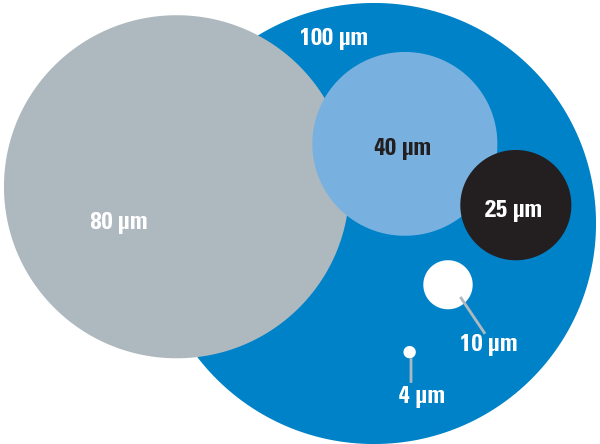
- You cannot see below about 40 microns
- A red blood cell is approximately 8 microns
- Even smaller contaminants can contribute to hydraulic system wear
How Big is a Micron?
- Grain of table salt 100 µm
- Human hair 80 µm
- Lower limit of visibility 40 µm
- White blood cell 25 µm
- Talcum powder 10 µm
- Red blood cell 8 µm
- Bacteria 2 µm
- Silt <5 µm
Best Practices When Replacing Hydraulic Hoses
Replacing hoses is a routine maintenance task, and as a minimum, you can reduce the risk of creating excessive additional contamination:
- Use a wet cutting blade instead of a dry one to minimize airborne particles
- Blow out the hose with compressed air after cutting
- Vacuum loose particles
Shooting a foam cleaner through the hose via compressed air is one of the more efficient ways to thoroughly clean a hose. Theoretically, these systems can clean your hoses to an ISO 4406 13/10 level. Results will be influenced by many variables:
- Was the foam projectile the proper diameter for the hose?
- Was the projectile dry or wetted with solvent?
- How many shots of foam were used?
- Was it done before the ends were crimped on?
It stands to reason that the more times the correct foam cleaner is shot through the hose, the cleaner the hose will be.
Don’t Overlook External Contamination
Before reconnecting a hose, inspect the fittings. These will be exposed to environmental dirt and grime, which can easily enter the system during installation. Be sure to:
- Clean the hose ends, connectors, and couplings thoroughly
- When possible, avoid working in dusty or wet environments when replacing hoses
Know When It’s Time to Replace a Hose
Old hoses are more likely to create particulate or simply fail. Keep an eye out for:
- Hoses that creak
- Flexible hoses that are no longer flexible
- Cracks or rust
- Wear marks, abrasion or impact damage
- Hydraulic hoses feature printed manufacture dates; confirm these do not exceed the recommended service life
Filtration: Your Final Line of Defense
Even with the best hose-handling practices, contamination can still occur. That’s why a well-designed and maintained hydraulic filtration system is essential. Consider:
- Nearly 70% of hydraulic failures are due to contaminated fluid
- Filtration protects both upstream and downstream system components
- Every hydraulic filter has a specific job within the system
Protect Your Investment
Hydraulic fluid contamination is a constant threat - but it’s one that you can manage. Incorporate effective filtration and proactively think and work clean when conducting any hydraulic maintenance. You can keep your systems running smoothly and avoid unplanned downtime.