
Why Sampling Matters
Fluid cleanliness is the core of any contamination control program, and by analysing a small fluid sample, you can detect contaminants, monitor wear, and spot potential problems early—before they lead to costly downtime.
It's best to start your contamination control program by establishing a baseline from repeatable fuel and oil samples, allowing you to monitor trends. The accuracy and value of your fluid analysis rely upon the quality and consistency of sample collection. Here are some suggestions to achieve accurate results:
Everything Remains the Same
People will promote different methods of sample collection, but agree:
- It’s easy to take a bad sample showing highly contaminated fluid
- There is skill, almost an art, to taking a clean sample
- Your site's sampling process must be documented, and all persons trained
- Consistency is key; ideally, the same person using the same method every time
Choose the Right Sampling Location
To take a representative sample, use only high-quality, well-placed equipment:
- Samples are best taken when the system is active; static samples may be inaccurate.
- The sampling points should be midstream; test points mounted at the top or bottom of a pipe may give a different result.
- A sampling point immediately after a fluid direction change may not be accurate.
- Confirm that test points are suited to the system's operating pressures
- Install mini-mess test points, which are closed and capped when not in use
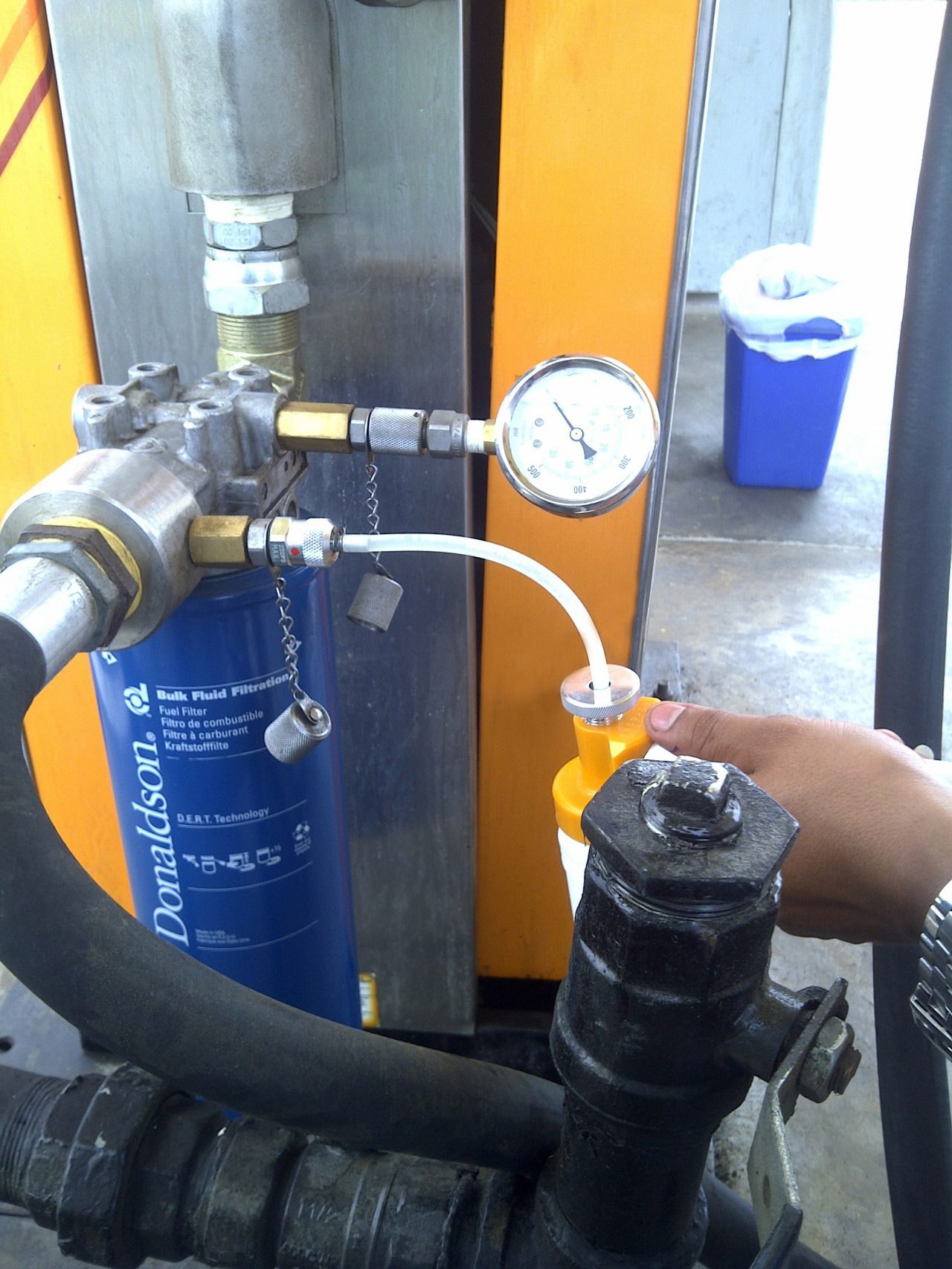
- Use sampling port adapters on filter heads for upstream and downstream access.
For more details, refer to Donaldson’s Bulk Filtration Product Guide.
Consider What You Are Trying to Learn
If you are evaluating filter performance:
- Take samples immediately before and after the filter head or manifold
- Aged pipes and hoses may add additional contamination further downstream
- A sample taken from the dispenser outlet may not reflect the cleanliness of the filter
Before Taking a Sample:
- Mineral spirits are recommended for offline cleaning, All testing tools should be thoroughly cleaned
- Flush the line, allowing a reasonable volume of fluid to go to waste. This step is essential to clean debris from the dead legs, the sample port, the port adapter, and the sample tube.
- The sample tube and sample bottle should be installed as close to the flow line as is practicable.
New sample bottles aren’t always clean enough for critical testing:
- Dirt is everywhere, and new bottles can contain excessive amounts of contamination to obtain precise analysis.
- Consider pre-rinsing the bottle by partially filling it with sample fluid and shaking the bottle, disposing of the fluid to waste, and repeating the process 2–3 times before collecting your final sample.
- Avoid opening the sample bottle in dusty or windy conditions.
- Do not wipe out the bottle with a rag or store the cap in your pocket while sampling.
Document Everything
To compare data over time and catch critical trends, be consistent. That means:
- Following the same procedure every time
- Documenting each step so the process is repeatable and standardized
- Ensure no steps are skipped or changed without documentation.
There Is Always Help Available
Consult your Donaldson representative for specialist advice.