
In a perfect world, every stage of a hydraulic system would have its own filter, both before and after each component. In reality, budgets, space constraints, and pressure loss through the filters mean hydraulic systems must balance protection with practicality.
That’s why understanding the different types of hydraulic filters—and what they protect—is key to maximizing system life and minimizing downtime.
What Affects Filter Placement?
Filtration design varies depending on factors such as:
Component sensitivity and cleanliness requirements
Ambient contamination levels
Duty cycle of the equipment
Ease of servicing and part replacement
System pressure and tolerance levels
Critical value of the machine
Now, let’s look at the main types of filters you might find in a hydraulic system.
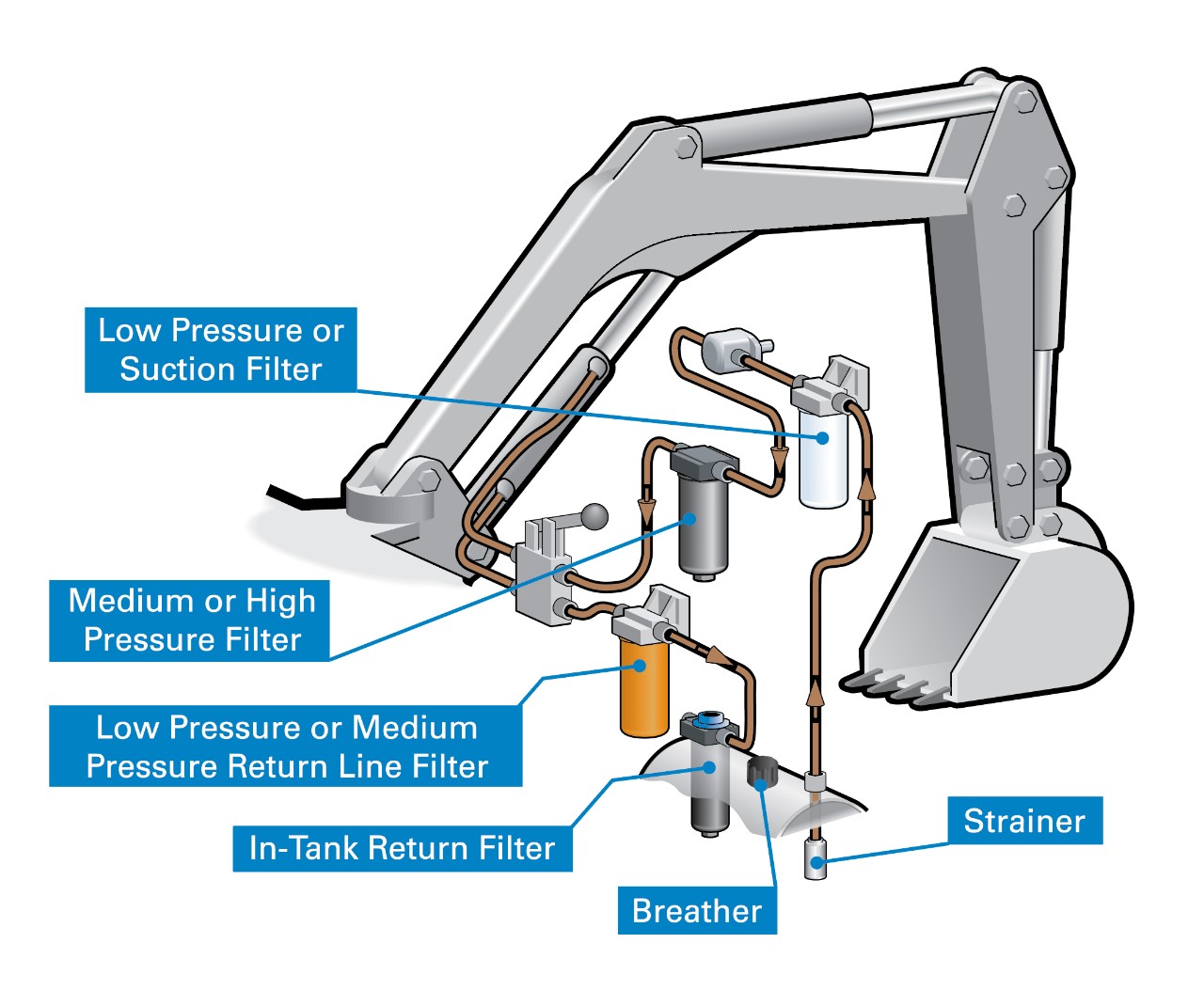
1. Suction Strainers
Located inside the reservoir, suction strainers block large contaminants like cable ties, nuts, bolts, or debris (150+ microns) from reaching the pump.
Why they matter:
Inexpensive protection against catastrophic pump damage
May minimise air bubbles from entering the circuit
Acts as a final safeguard from unexpected large debris
2. Suction or Low-Pressure Filters
These are usually spin-on filters installed between the tank and the pump. Designed to protect the pump from harmful contaminants without causing cavitation, they are often steel mesh or open medias. Low-pressure spin-on filters are easy to service and less expensive than many other types of filters.
Key points:
Easy to service and affordable
Feature a broad range of micron ratings
Minimise the risk of pump cavitation
3. High-Pressure Filters
Installed after the pump, these filters clean fluid before it reaches critical components like actuators or servo valves.
Why they’re essential:
Protect high-value parts
The most important filter in an advanced high-pressure system
Critical applications may not include bypass valves
Downsides:
Withstanding pressures up to 450 bar (6,500 psi) , housings are heavy and costly
Non-duplex designs require a full system shutdown for servicing
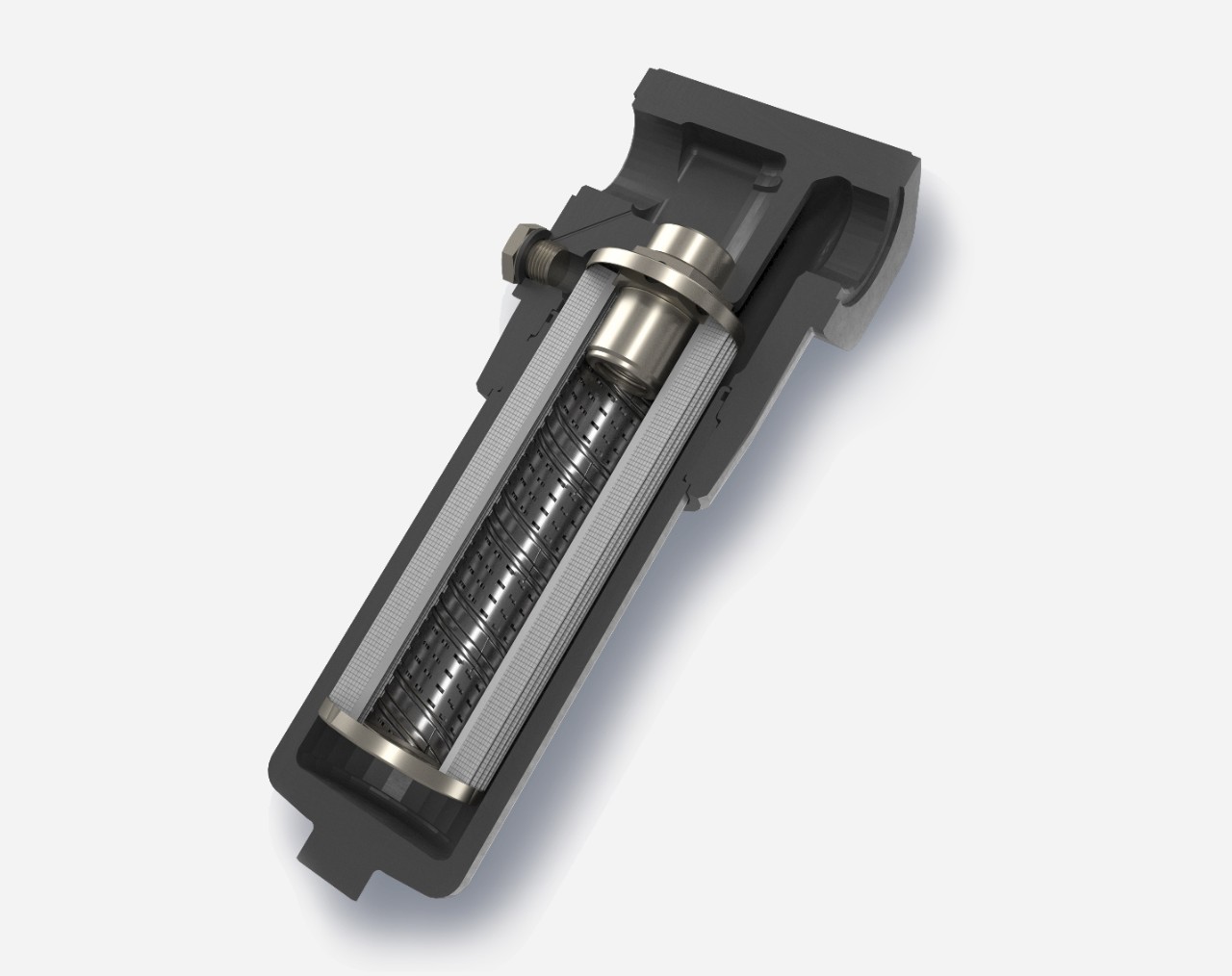 High-pressure hydraulic filter assembly
4. Spin-On vs. Cartridge Filters
Spin-On Filters:
Quick and easy to remove and replace
The media and filter can be discarded during service
May be a higher element cost and more waste
Cartridge Filters:
Only the internal element is replaced
Lower element cost and reduced waste
Multiple complex servicing steps may result in greater fluid loss or disposal
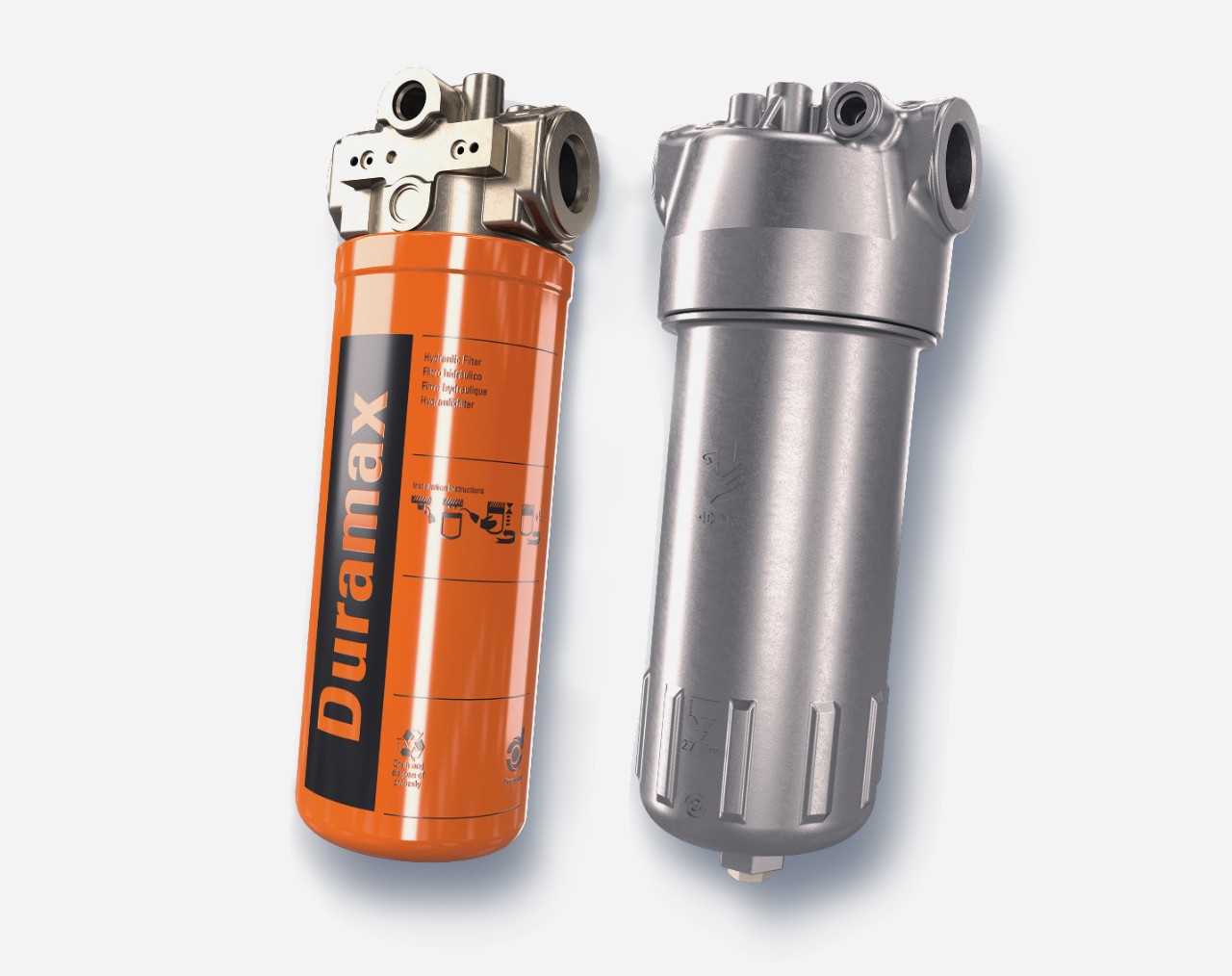 Medium-pressure spin-on Duramax and cartridge-bowl FLK
Choosing between them often comes down to balancing service ease, environmental considerations, and total cost of ownership.
5. Reservoir Breathers
Breathers filter the air entering a reservoir as fluid levels rise and fall during machine operation.
What they protect against:
Airborne particles
Moisture ingress (in the case of Donaldson T.R.A.P. breathers)
Tip: Breathers are often overlooked but offer exceptional value for their cost. Regular inspection and replacement can significantly reduce system wear and contamination.
6. Off-Line Filtration (Kidney Loop Systems)
These standalone systems can be used to continuously filter fluid, whether the main system is running or not.
Advantages:
Provide high-efficiency filtration
Do not interfere with the existing filtration or equipment performance
Extend hydraulic fluid life and service intervals
Ideal for critical systems where uptime is crucial
Limitations:
Do not directly protect in-line components
Require an external power source
Bottom Line: Know Your Filters
Whether you realize it or not, if you own or operate hydraulic equipment, filtration is a critical part of your system. Filters work behind the scenes, protecting your biggest investments.
Best practices:
Follow your manufacturer’s filter specifications
Maintain a regular service schedule
Choose high-quality filters and breathers to avoid costly repairs and downtime
If you have questions or need help selecting the right filter for your machine, contact a Donaldson expert—we’re here to help.