
What Is the SQF Air Quality Standard?
In the SQF Code, Edition 9 [1], the requirements for compressed air and other gases are detailed in section 11.5.5, titled "Air and Other Gases." This section specifies that compressed air or other gases (e.g., nitrogen or carbon dioxide) that come into contact with food or food-contact surfaces must be clean and present no risk to food safety. It also mandates regular maintenance and monitoring of these systems for quality and applicable food safety hazards.
Why Is the Air Quality Standard Important?
Preventing Contamination: Compressed air can be a source of chemical and microbiological contamination. Dust particles, hydrocarbons, and humidity can be collected from the environment and concentrated by the air compressor. Oil aerosols from the compressor lubricant and rust particles from the piping can also enter the compressed air stream. If these contaminants are not removed, they can negatively impact food safety and quality.
Food and beverage manufacturers should understand the importance of the following actions:
- Use Clean Air: The SQF Code requires that compressed air coming into contact with food or food-contact surfaces be free from harmful contaminants.
- Monitor Regularly: The SQF Code mandates that manufacturers proactively identify and address any potential risks before they affect food products.
- Comply with Standards: Adhering to the SQF compressed air quality standards supports compliance with Good Manufacturing Practices (GMPs) and other regulatory requirements. This not only helps maintain food safety but also meets customer and regulatory expectations.
There are several Good Manufacturing Practices (GMPs) published to ensure superior air quality. One of the most important GMPs relates to adequate point-of-use filtration. Since contaminants can enter the air stream at all points in the process, point-of-use filtration ensures that clean, filtered air comes into contact with food and food-contact areas.
How Can I Meet the SQF Air Quality Standard?
Meeting the SQF Compressed Air Quality Standard (Edition 9) using compressed air filtration involves several key steps:
- Identify Critical Control Points: Determine where compressed air comes into contact with food or food-contact surfaces. These points are critical for air quality.
- Install Appropriate Filters: Use a multi-stage filtration system to remove contaminants. This typically includes:
- Particulate Filters: To remove dust, dirt, and other solid particles.
- Coalescing Filters: To remove oil aerosols and fine particulates.
- Activated Carbon Filters: To remove oil vapors and odors.
- Monitor and Maintain Filters: Regularly check and replace filters according to the manufacturer's recommendations. This supports the filtration system's efficacy.
- Conduct Regular Testing: Perform routine air quality testing to verify that the compressed air meets the required standards. This includes testing for particulates, oil, and moisture content.
- Document Procedures and Results: Keep detailed records of your filtration system maintenance, air quality tests, and any corrective actions taken. This documentation is essential for SQF audits.
- Train Staff: Ensure that all relevant personnel are trained on the importance of compressed air quality, how to maintain the filtration system, and how to conduct air quality tests.
Understanding the Role of ISO 8573-1
ISO 8573-1 plays a crucial role in ensuring compressed air quality meets the standards required by SQF Edition 9. Here’s how it contributes:
- Defining Air Quality Classes: ISO 8573-1 specifies the quality requirements for compressed air by defining classes for particulate matter, water, and oil content. This helps facilities understand the levels of purity needed for their specific applications.
- Setting Contaminant Limits: The standard sets limits for contaminants in compressed air, ensuring the air used in food processing is clean and free from harmful particles, moisture, and oil [2]. This is essential for maintaining food safety and quality.
- Guiding Monitoring and Testing: ISO 8573-1 provides guidelines for testing and monitoring compressed air systems. This aligns with SQF Edition 9’s requirement for regular monitoring and maintenance.
- Ensuring Compliance: By adhering to ISO 8573-1, facilities can reduce the risk of contamination and ensure compliance with food safety regulations.
Incorporating ISO 8573-1 into your compressed air quality management helps maintain high standards of food safety and quality, ensuring the air used in your processes is clean and appropriate for use.
Filtration Options
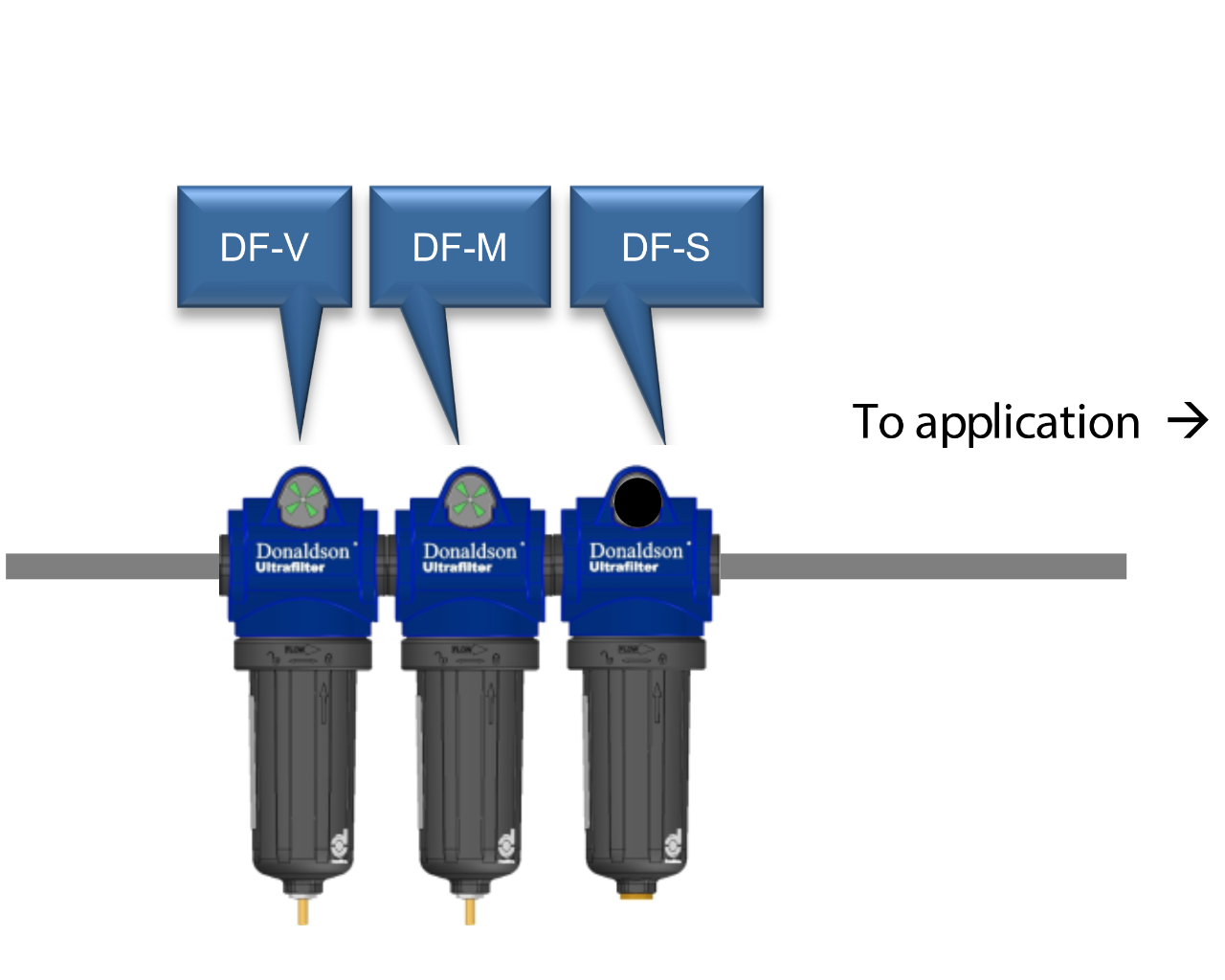
Option 1: All Aluminum Housings – Use when Steam-In-Place sterilization is not required.
- DF-V Particulate Filter Element (99.9% efficiency at 5 microns): Replace annually or when differential pressure is indicated on the gauge.
- DF-M Coalescing Filter Element (99.9999% efficiency at 0.01 microns): Replace annually or when differential pressure is indicated on the gauge.
- DF-S SQF Final Filter Element (99.99998% efficiency at 0.01 microns): Replace every 3 months.
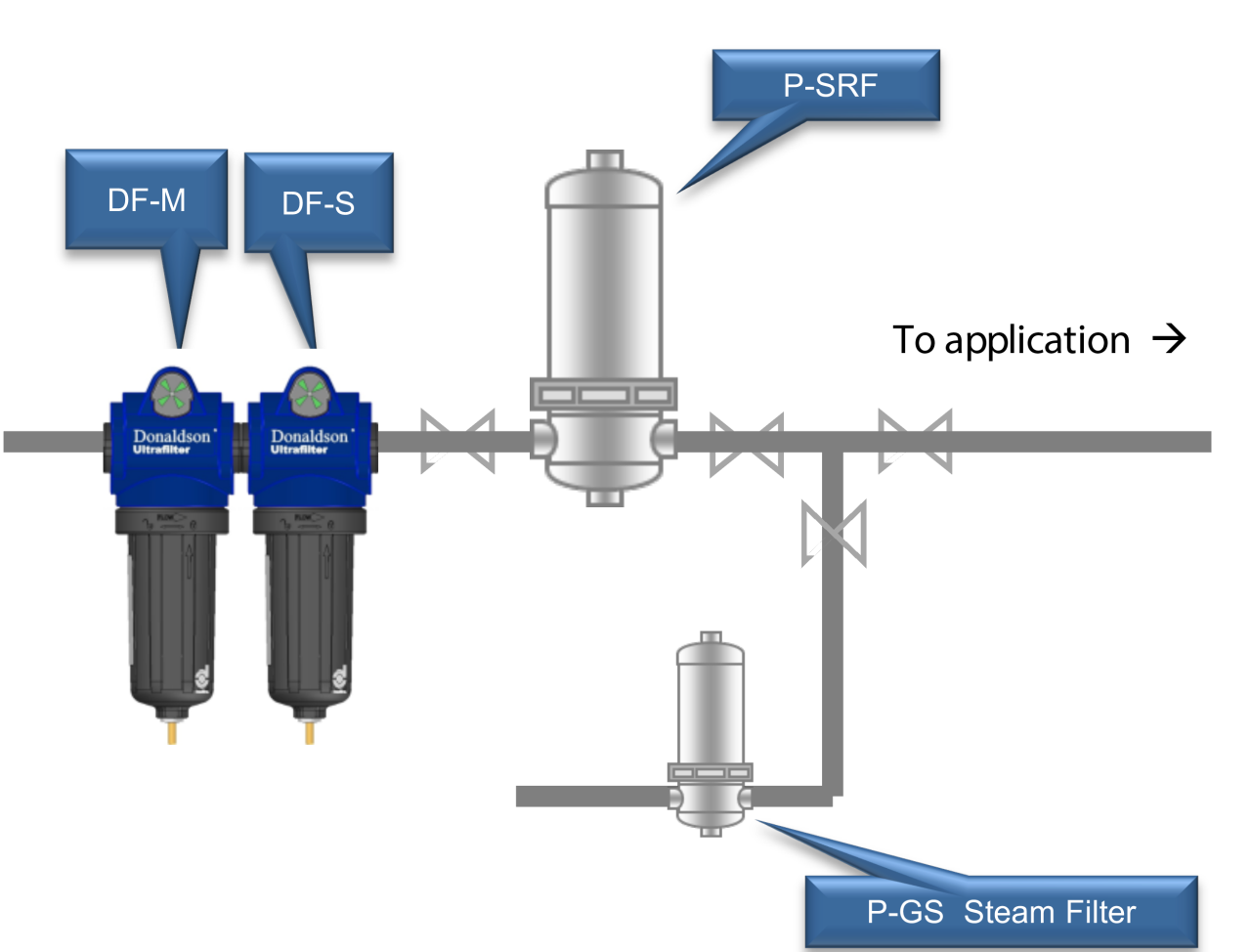
Option 2: Hybrid of Aluminum and Stainless Steel Housings – Use when Steam-In-Place sterilization is required.
- DF-M Particulate Filter Element (99.9999% efficiency at 0.01 microns: Replace annually or when differential pressure is indicated on the gauge.
- DF-S Coalescing Filter Element (99.99998% efficiency at 0.01 microns): Replace annually or when differential pressure is indicated on the gauge.
- P-SRF SQF Final Filter Element (99.9999998% efficiency at 0.02 microns): Replace every 3 months or after 100 Steam Sterilization Cycles.
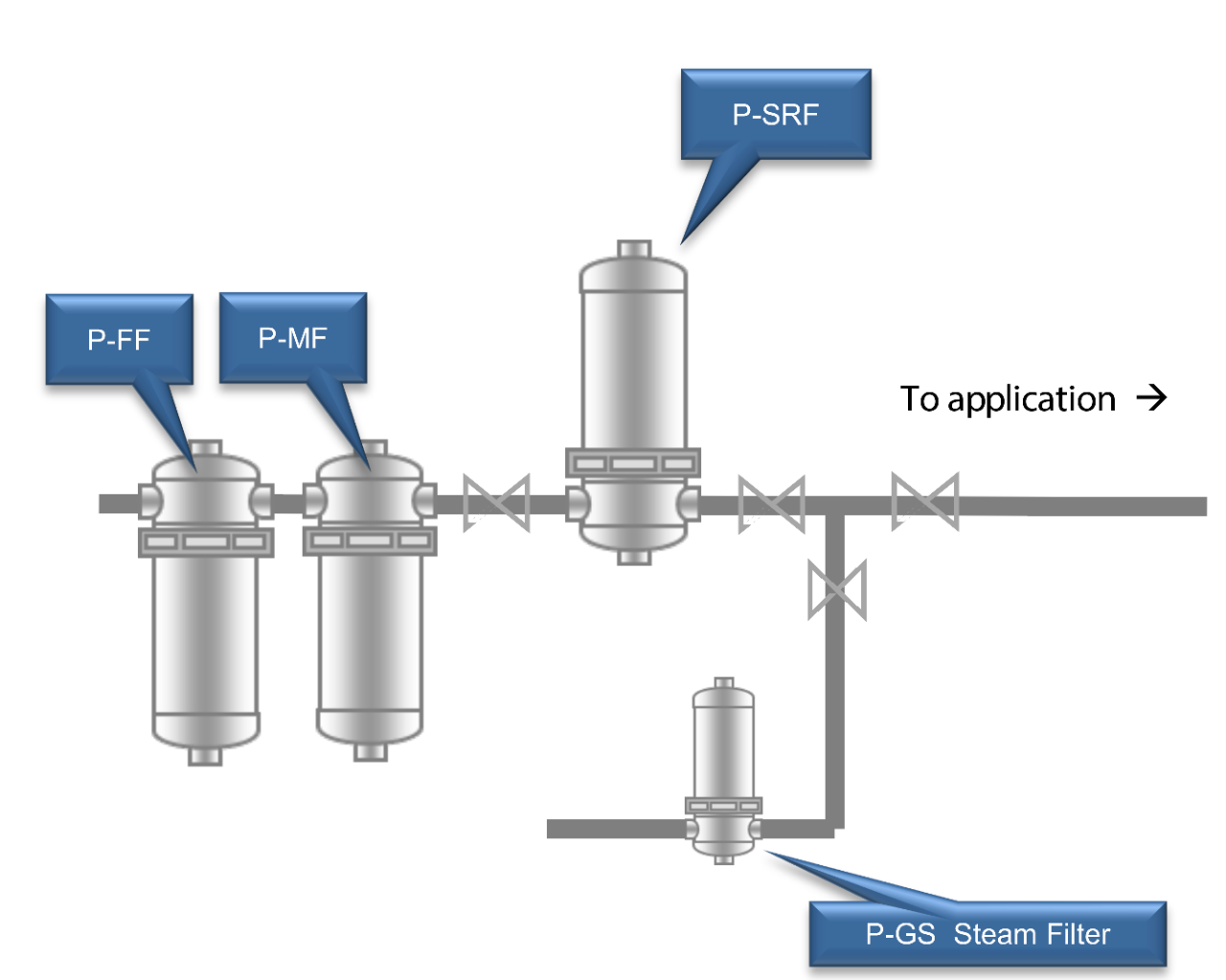
Option 3: All Stainless Steel Housings – Use when Steam-In-Place sterilization or stainless steel filter housings are required.
- P-FF Particulate Filter Element (99.9999% efficiency at 0.01 microns): Replace annually or when differential pressure is indicated on the gauge.
- P-MF Coalescing Filter Element (99.99998% efficiency at 0.01 microns): Replace annually or when differential pressure is indicated on the gauge.
- P-SRF SQF Final Filter Element (99.9999998% efficiency at 0.02 microns): Replace every 3 months or after 100 Steam Sterilization Cycles.
About SQF
The SQF Program (Safe Quality Food) is a rigorous and credible food safety and quality management system recognized by retailers, brand owners, and food service providers worldwide. Developed and managed by the Safe Quality Food Institute (SQFI), the program helps companies demonstrate their commitment to producing safe, high-quality food. SQF certification supports compliance with global regulatory requirements and offers assurance to customers through independent, third-party auditing.
SQF is a registered trademark of the Safe Quality Food Institute.
References
[1] SQF Edition 9 Compressed Air Updates
[2] A Guide to the ISO 8573 Series Compressed Air Quality Standard