Overview
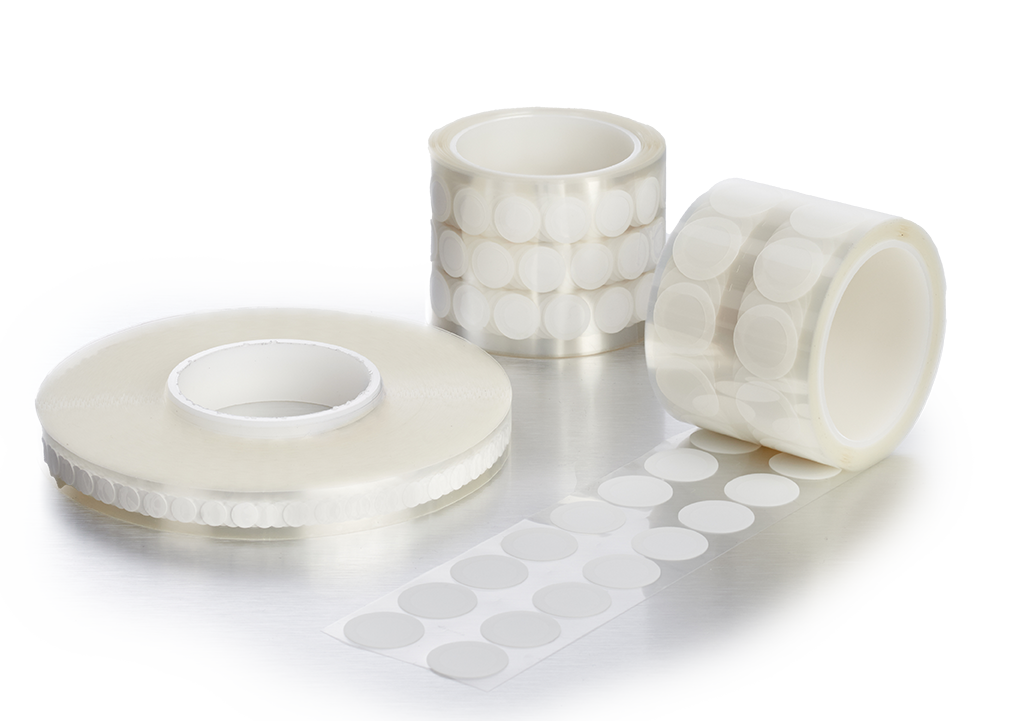
Donaldson Press-Fit enclosure protection vents are designed to protect enclosures and devices from particles, water, oils, and other liquids without negatively affecting their operation. They are comprised of a filtration material and a pressure-sensitive adhesive ring for securing the vent to the device.
Our press-fit vents resist water, oils, and other contaminants with hydrophobic and oleophobic options. Available in standard or custom sizes, many feature our proprietary Tetratex™ ePTFE membrane and support layers like polyethylene, nylon, or nonwovens, delivering reliable protection and flexibility for tough environments.
Features
- Wide variety of air flows available
- Pressure equalization – for large range of enclosure sizes
- Eliminates the need for costly hermetic sealing
- Repels water, oils, and other liquids
- Oil ratings from 1 to 8
- IP ratings up to IP69K
- Easy application and device integration
- Standard and custom sizes and shapes are available
- Water entry pressure (WEP) up to 70 PSI
- Weld-Fit (non-adhesive) enclosure protection vents are also available for integration into your device
Standard Materials Available
- The many options include Donaldson's proprietary Tetratex™ ePTFE membrane. Many also include a support layer made of polyethylene, nonwoven, and extruded materials such as nylon, polyester, polypropylene, and polyester/polyethylene.
- Hydrophobic and oleophobic options are available
- Continuous Operating Temperature Range: -40° to 150° C / -40° to 302° F
- Select materials have short term temperature ranges up to 260° C / 500° F
- Material data sheets available upon request
Packaging
- Manufactured, inspected and packaged in clean room environment
- Typically supplied in roll form on polyethylene cores
- Roll sealed in cleanroom bag unless otherwise specified
Handling Instructions
- Wear gloves or use rounded tweezers when handling the vents
- Mounting surfaces should be clean and free of oils, particles, and other contaminants
- Vents should be mounted on flat, vertical surfaces where liquids or other contaminants will not pool
- Follow dispenser instructions when using an automated vent dispenser
- For manual vent dispensing, roll the liner under the vent until the vent extends beyond the liner and becomes easily accessible
- Do not pry the vent from the liner or fold the vent, as this could damage the vent
Assembly Instructions
- Accurate placement of the vents can be improved by using markings, a recessed area, or a target area in which the vent is centered over the vent hole in the device or housing
- Apply light finger pressure (15 PSI recommended) to the adhesive ring to seal the vent to the device or housing
- Do not attempt to reposition the vent after installation. This can cause damage to the vents
- Allow at least 24 hours dwell time before using or testing the vent
Applications:
- Automotive lighting
- Automotive electrics – motors, inverters, converters
- Fluid reservoirs
- Sensors – humidity, temperature, pressure, and gas sensors
- Elective vehicle battery packs
- Lighting enclosures – industrial, outdoor, arena and events lighting
- General enclosures
- Protective cases
- Electrical and communication junction boxes
- Solar energy enclosures
- Appliances