
Overview:
Many manufacturing processes generate very fine dust particles that can become airborne and subsequently settle on surfaces throughout the plant. Eventually, if these particles are not regularly cleaned, they not only create a housekeeping issue, but if dispersed into the air they have the potential to catch fire and/or cause an explosion. These types of dust are often referred to as combustible dust and, under certain conditions, can create fire and explosion hazards.
Common categories and some examples of combustible dusts include:
- Metals: aluminium, magnesium, titanium, iron, zinc
- Organic materials: wood, grain, flour, sugar, powdered milk, coal
- Plastics: acrylic, phenolic resins, polyester, polyethylene
- Chemicals: dyes, sulphur, pharmaceutical ingredients
It is essential for process owners and manufacturing facility managers to understand the hazards associated with combustible dust and to manage the related fire and explosion risks within their processes and facilities. Responsibility for evaluating and managing these risks, developing appropriate mitigation plans, and complying with applicable laws, regulations, and standards rests with the process owner, who is best positioned to assess the specific characteristics of their process, facility, and workforce. A well-designed, properly maintained, and correctly operated dust collection system can be an important part of an overall combustible dust risk management strategy.
Donaldson can support your combustible dust control strategy by supplying dust collection solutions and collaborating with you and your qualified fire and explosion protection experts to identify appropriate dust collection, fire protection, and explosion protection measures for your application.
Strategy
Getting Started On Your Mitigation Strategy
Each facility’s dust hazard analysis and eventual explosion mitigation plan will be unique, so there is no ‘one’ strategy that everyone should follow. Nonetheless, there are some basic steps* that can help you get started on your mitigation plan:
- Determine whether your dust is combustible — Start by assessing your dust and processes to determine whether your dust is combustible by sending a properly collected sample of your dust to a qualified lab. If the dust is determined to be combustible, additional testing can help determine its explosibility characteristics, ignition sensitivity, and explosion severity.
- Understand the basics and examine your processes — Learn how fires and explosions can happen by understanding the fire triangle and explosion pentagon. To identify and manage one or more of the elements in the triangle to decrease fire and explosion risks, you should audit your process to identify where nuisance dusts are generated, released, or tend to accumulate. These are often intake and mixing locations, bag dumps, and welding or cutting stations. In each location, analyze the production processes, housekeeping practices, dust control measures, and potential ignition sources present.
This information will help direct the selection of equipment needed to help mitigate these hazards.
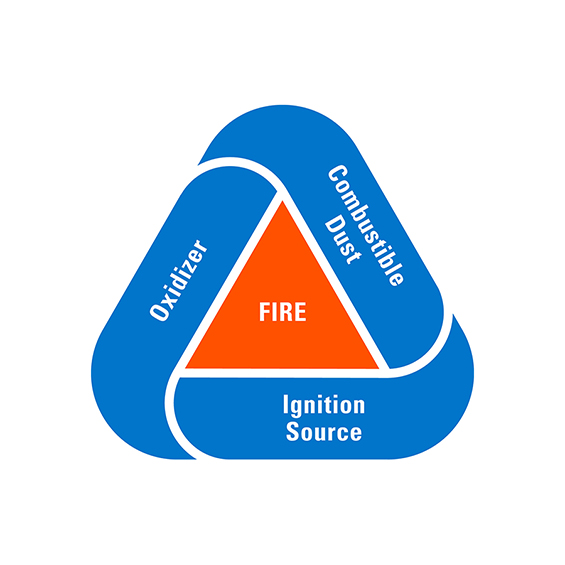
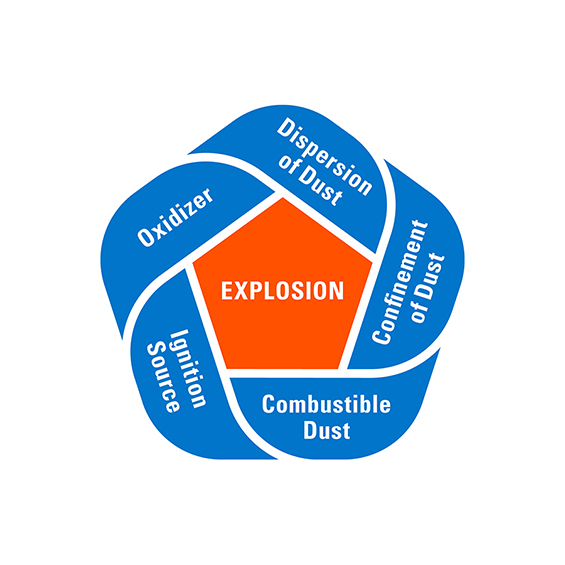
3. Know your laws and regulations — The process owner is responsible for the selection of the combustible material management strategy and to assure compliance with all applicable directives, codes and standards.
Local, national, and international regulations, codes, and standards will impact your combustible dust mitigation strategy. Knowing the regulations that apply to your facility is critical, and you should always research the legal requirements in your area and develop a mitigation plan accordingly.
ATEX Directives |
NFPA Directives |
In Europe and many other regions, the of the world, the two of the most commonly referenced standards related to the protection of employees and equipment from risks related to potentially explosive atmospheres are 1999/92/EC and 2014/34/EU (ATEX Directives (1999/92/EC and 2014/34/EU) set requirements for managing risks associated with potentially explosive atmospheres. These directives cover hazard assessment, equipment selection, and safe operation where combustible dust may be present. Compliance is mandatory within the EU, and process owners are responsible for determining how these requirements apply to their specific operations. Working with qualified experts can help support a comprehensive combustible dust management strategy.
|
In North America, combustible dust requirements are defined by codes such as the International Mechanical Code (IMC), International Fire Code (IFC), OSHA regulations, and standards from the National Fire Protection Association (NFPA) and Factory Mutual (FM). NFPA 660, the Standard for Combustible Dusts, provides a consolidated framework for identifying hazards and applying prevention and protection measures. As these standards are often referenced or enforced by authorities, process owners are responsible for determining how they apply to their specific operations and mitigation strategy. |
4. Develop a mitigation plan — Once you understand your dust, have analyzed your processes and facility, and have studied the applicable laws and regulations, you can start developing your combustible dust risk mitigation plan.
The four key measures to consider when developing your plan are:
Prevention measures (e.g., training employees, using equipment fitted with separator devices designed to remove tramp metal or other materials that could act as ignition sources, etc.)
Dust control measures (e.g., having well-designed and operated dust collection systems, ensuring proper maintenance and housekeeping, etc.)
Ignition control measures (e.g., implementing an ignition control plan such as grounding and bonding, minimizing static electrical charge, ensuring no improper mixture of metals, ‘no smoking’ signs, etc.)
Protection measures (e.g., location of the dust collectors, dust collector protection features such as spark detection, explosion venting, or explosion isolation where appropriate, maintenance of emergency exits, etc.)
One important element of a combustible dust risk mitigation strategy is selecting an appropriate dust collection system.
As a manufacturer and supplier of industrial filtration solutions, we can assist process owners in the selection of filtration technologies. To provide this support, we need complete and accurate information on all potentially combustible contaminants and the fire and/or explosion mitigation plan(s) that you as a process owner intend to pursue. Once your risk mitigation plan has been developed, we can work with you and your qualified experts to help integrate Donaldson equipment into your overall dust management strategy.
Solutions
Leveraging our extensive experience combined with our wide breadth of product offerings, we can support your combustible dust management strategy by helping identify dust collection solutions appropriate for your application. Our solutions are designed to support the management of combustible dust and associated risks within your process.
To help support combustible dust management, we offer a range of dust collection, fire protection, and explosion protection solutions designed to meet the needs of different applications and regional requirements. Contact us to discuss your application and learn more about the solutions available for your facility.