
Understanding the Role of a Compressed Air Dryer
Compressed air dryers play a critical role in industrial compressed air systems by removing moisture from compressed air before it reaches downstream equipment, tools, and production processes. Moisture control is essential for maintaining air quality, system reliability, and operational productivity across industries such as manufacturing, automotive, food processing, electronics, and general industrial applications.
Without regular performance monitoring, compressed air dryer efficiency can gradually decline. This can lead to moisture contamination, increased energy consumption, premature equipment wear, unplanned downtime, and higher lifecycle costs.
Preventing Moisture Contamination in Compressed Air Systems
Excess moisture is one of the most common and damaging issues in compressed air systems. When a dryer fails to maintain the required pressure dew point, water vapor can condense inside air lines and equipment.
Potential consequences include:
- Internal corrosion of pipes, tanks, and fittings
- Damage to pneumatic valves, cylinders, and actuators
- Rust or moisture contamination in sensitive production processes
- Compromised product integrity due to moisture intrusion, leading to quality defects or rejected batches
- Poor surface finishes in painting or coating applications
- Freezing of outdoor or low-temperature air lines
Monitoring dryer dew point performance allows operators to detect moisture-related issues early before they result in system failures, quality defects, or operational issues.
Reducing Energy Consumption and Operating Costs
Compressed air is one of the most energy-intensive utilities in industrial facilities. A poorly performing compressed air dryer can significantly increase energy consumption by creating excess pressure drop or forcing compressors to operate at higher load levels.
Common causes of reduced dryer efficiency include:
- Clogged pre-filters or after-filters
- Inefficient regeneration cycles
- Contaminated or degraded desiccant material
- Incorrect airflow rates or improper dryer sizing
Continuous monitoring of dryer operating parameters helps identify inefficiencies early, supporting energy optimization initiatives, lower electricity usage, and reduced total cost of ownership.
Helping to Protect Equipment, Products, and Production Quality
Moist compressed air accelerates wear and tear on tools, machinery, and control systems. Seals, bearings, electronic components, and pneumatic devices are particularly sensitive to moisture exposure and may fail prematurely without proper air treatment.
In industries where compressed air comes into direct or indirect contact with products or packaging - such as food processing, glass manufacturing, and electronics production -excess humidity can compromise product quality, consistency, and compliance with international quality standards.
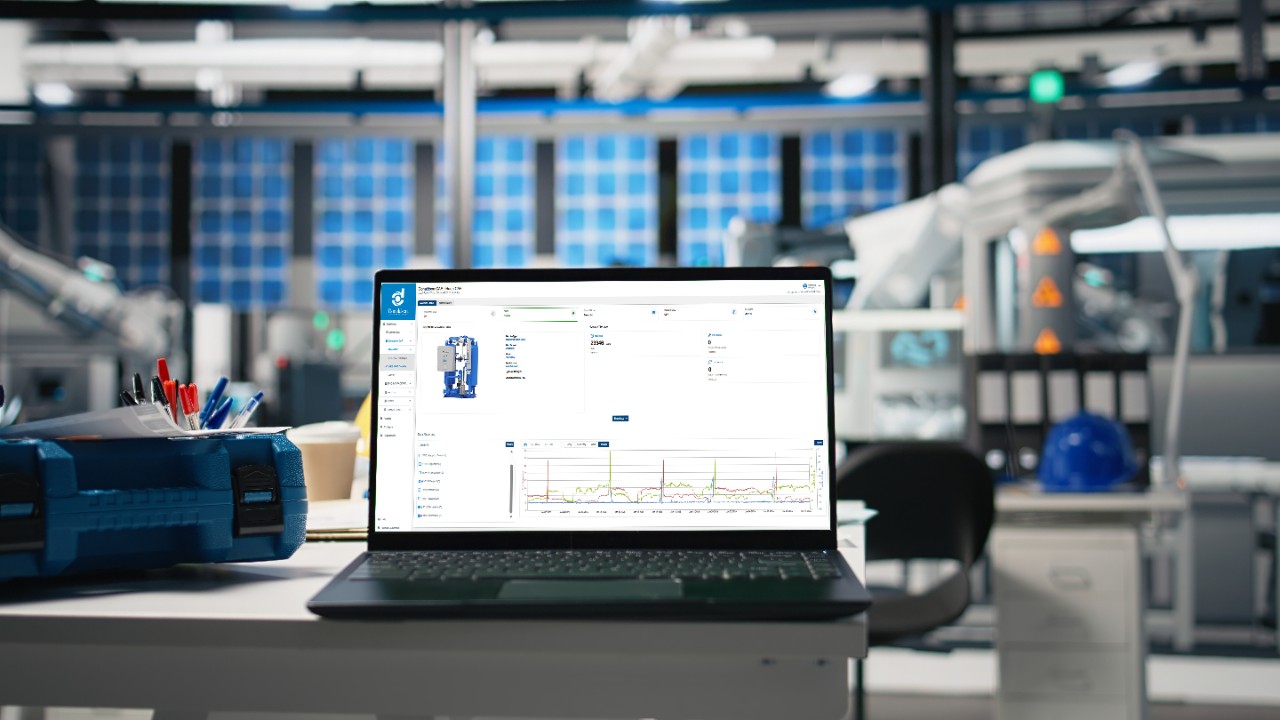
Digital monitoring solutions such as Donaldson’s iCue™ Connected Technology enable continuous tracking of dryer performance metrics and provide actionable alerts when operating conditions fall outside the defined parameters set by the operator, helping teams address potential issues before they impact production.
Effective dryer performance monitoring supports stable production, reduced scrap rates, and long equipment service life.
Key Performance Indicators (KPIs) to Monitor
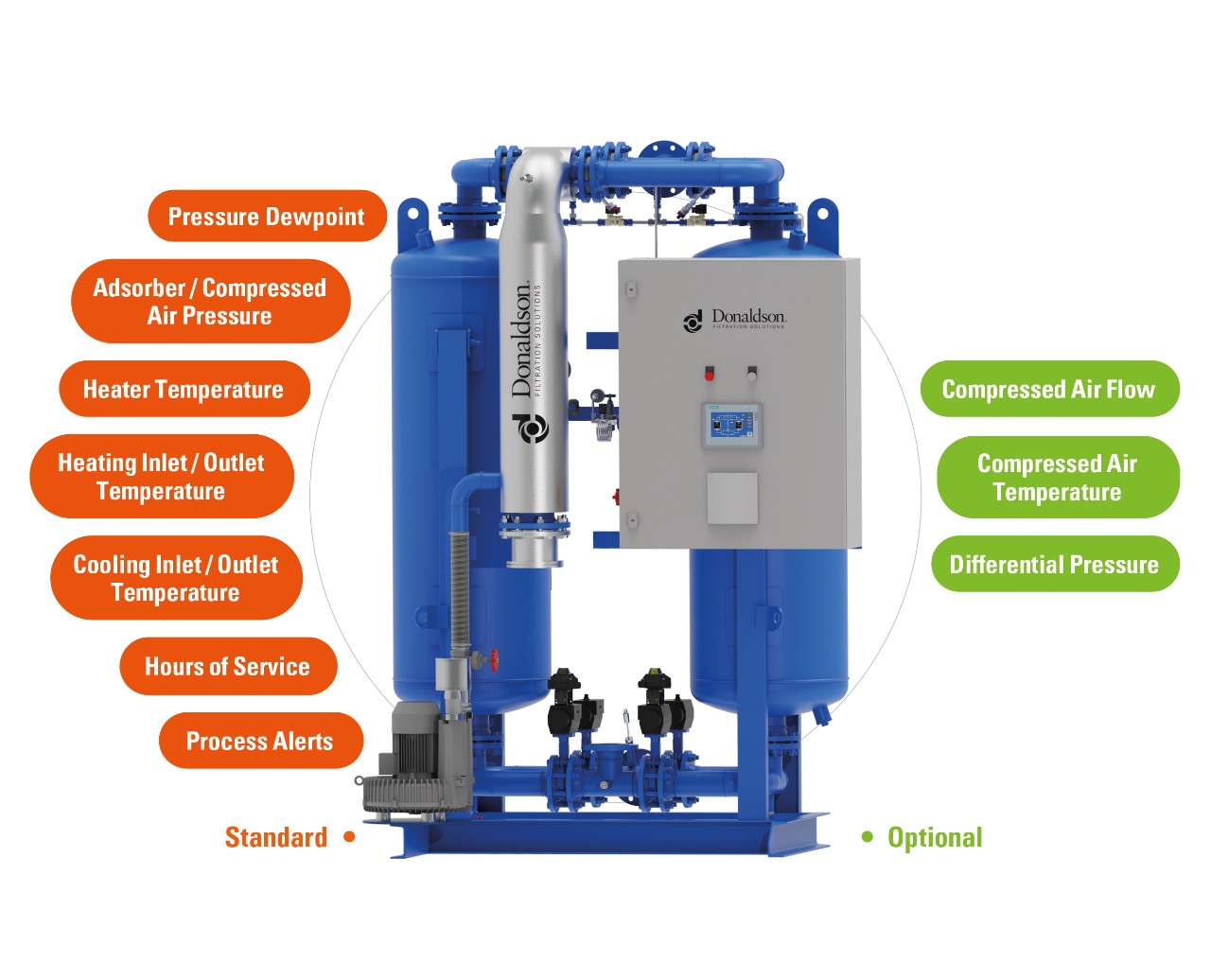
Evaluating compressed air dryer performance requires tracking several critical operating parameters, including:
- Pressure dewpoint
- Operating temperatures
- Differential pressure
- Airflow rate
- Total hours of operation and service intervals
- System alerts
Trending and analyzing these KPIs enables predictive maintenance strategies and helps prevent minor performance issues from developing into costly system failures.
Global Compliance and Operational Best Practices
Regular monitoring of compressed air dryers supports alignment with widely recognized international standards and best practices, including energy management, EHS, and quality assurance frameworks. Consistent documentation of performance data can also help facilities meet regional regulatory expectations related to efficiency, safety, and operational control.
Conclusion
Monitoring compressed air dryer performance supports operators’ efforts to maintain air quality, improve energy efficiency, protect equipment, and support reliable production operations. Tracking key performance indicators and addressing issues early can help industrial operators proactively address downtime, keep maintenance costs low, and extend the life of their compressed air systems - regardless of location or industry sector.