
Reverse osmosis (RO) filtration systems purify water used in the processing of food and beverages, pharmaceuticals, and other consumable products. Because RO membranes are key to product safety and also costly to replace, it’s important to protect them from the buildup of biofilm or premature fouling. Biofilm occurs when bacteria survive the activated carbon dichlorination step and multiply downstream to form microbe colonies on equipment surfaces. Premature fouling happens when contaminants start to build up earlier than foreseen, restricting the flow through the RO membrane.
The better source water is pre-filtered, the better it prevents these negative effects on the RO system, improving both product safety and RO membrane life. The FDA requires a pre-filter on water before it enters RO systems, but attention to the type of pre-filter used has many benefits.
An RO membrane that is well protected from microbes and damaging carbon particles typically lasts two years or longer, while one that fouls within a year may be an indication of substandard pre-filtration.
Here are three ways to better protect the RO membrane with higher performing pre-filtration:
1. Pay attention to filter composition.
Industry standards recommend a 5-micron filter for RO pre-filtration, but not all 5-micron filters are alike.
While meltblown filters have been the default prefilter option for years, testing has shown that Donaldson’s LifeTec media significantly improves performance- expanding filtration surface area by 400% to capture more contaminants without impeding process flow rates
Pleated pre-filters (left) pack more fabric into the same space as a melt-blown filter (right). The increased surface area provides better capture and longer filter life.
The dense media is engineered with larger pores on the upstream side narrowing to smaller ones on the downstream surface. This funnel structure creates a specific micron cut-off range and therefore delivers greater confidence that a pre-filter is effective.
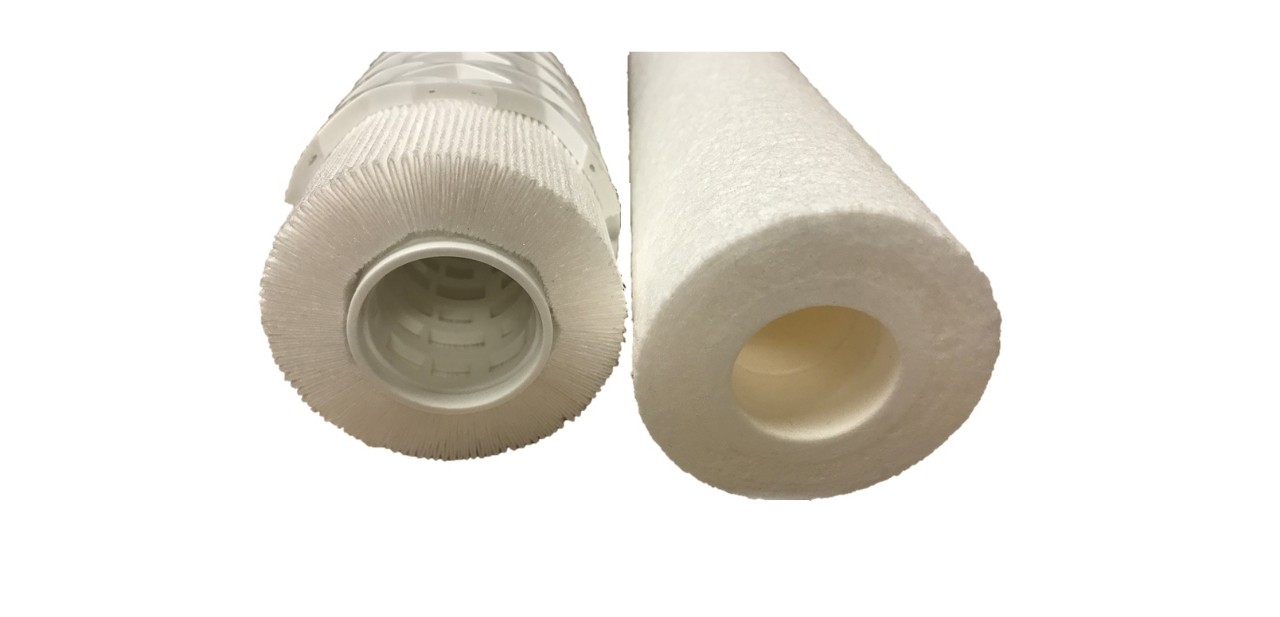 Pleated pre-filters (left) pack more fabric into the same space as a melt-blown filter (right). The increased surface area provides better capture and longer filter life.
2. Look for verifiable efficiency.
When selecting a filter, look beyond the micron size on the supplier’s technical data sheet, and seek out the “efficiency” rating. Efficiency is the percent of particulates a filter is verified to capture in the micron range on the label. Because there are no widely accepted measurement standard governing filter manufacturers, discernment in this area is important. Micron ratings, along with the terms “nominal” and “absolute,” are quite subjective, similar to claims of “low fat” in food labeling.
To illustrate how this confusion can happen, Donaldson tested melt-blown filters from five different manufacturers, all claiming to remove 1-micron contaminants. Because of the random fiber composition of the melt-blown filters, their efficiency performances ranged from below 20% to above 98%.
Newer filtration technology can be much more precise. The efficiency of LifeTec filters, for example, can be verified with laboratory testing, which Donaldson provides on all its process filters.
A LifeTec absolute rated filter with a capture size of 1 micron, for instance, will always remove 99.98% of particles 1 micron or larger. Donaldson periodically re-tests its filters to confirm this performance, and openly publishes this rating on all its labeling and data sheets.
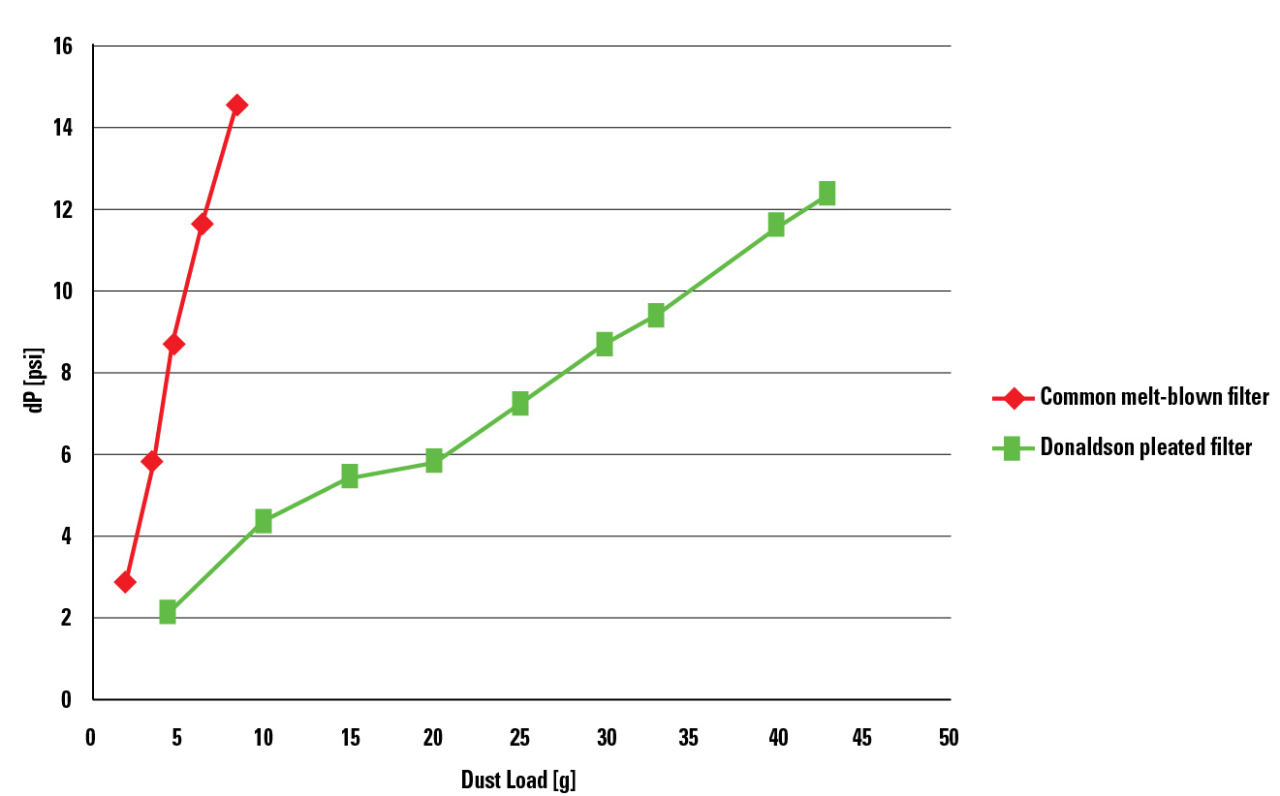 The greater dirt-holding capacity, reduced differential pressure, and longer life of a Donaldson pleated pre-filter, compared with a common melt-blown filter.
The greater dirt-holding capacity, reduced differential pressure, and longer life of a Donaldson pleated pre-filter, compared with a common melt-blown filter.
3. Consider long-term costs.
Finally, when making a serious attempt to prevent biofilm build-up or premature fouling at the lowest cost, think beyond the purchase price of the pre-filter. Many plants routinely schedule replacement of their melt-blown RO pre-filters once a week, out of habit. These costs add up.
While advanced pleated filters may cost more initially, the potential long-term cost savings can be considerable:
- RO membranes that last up to twice as long with better protection
- Reduced production downtime and maintenance with longer-lasting filter
- Minimizing the risk of process contamination with more consistent and highly efficient contaminant removal in the pre-RO stage

For optimal RO membrane protection, filtration engineers at Donaldson recommend installing a 1 to 5-micron absolute rated pleated filter either in place of the melt-blown filter, or directly after it, before water contacts the RO membrane. Doing so will not only extend the life of the RO membrane, but the pre-filter itself will last longer and maintain higher-volume flow rates due to the pleated design as well.
It is also important for operators to source their filters from a manufacturer that conducts and freely publishes its retention efficiency data with the corresponding micron size.